
"The World to Come" (Olam HaBa) is the term used in Judaism to describe the reward a person receives after death for their actions in this world. While it plays a central role in Jewish belief, it is not directly described in the Torah.
Why? Because Judaism is focused on what we do in this life. The Torah teaches us to concentrate on our deeds here and now, not on the reward that awaits us later. Beyond that, the World to Come is a purely spiritual realm. It cannot be understood in earthly terms bound by time, space, and physical limits. That's why the Torah does not attempt to describe it. The Torah speaks in the language of this world, while the next remains a mystery only the soul can grasp.
Why the Torah Doesn’t Describe the Afterlife Don’t mistake Judaism’s silence as avoidance. It’s a bold theological statement
Judaism speaks frequently about the World to Come (Olam HaBa), and it’s clear that this concept plays a central role in the eternal fate of the human soul. Yet, if it’s so important, why doesn’t the Torah offer vivid descriptions of the afterlife? Why isn’t there a clear account of what happens to the soul after death? Is the afterlife meant to remain a mysterious enigma?
Upon closer examination, while the Torah does not describe what Olam Haba looks like or what one feels there, it does allude to the reality of the afterlife. Several verses suggest that life in this world is a test and that the true reward lies beyond this life.
For instance, the Torah says: “To afflict you and test you, to do good for you in your end” (Devarim 8:16). The word “your end” refers to life after death. A similar message appears in another verse: “Observe and listen to all these words that I command you, so that it will be good for you and your children after you forever, for you will be doing what is good and right in the eyes of the Lord your God” (Devarim 12:28). The phrase “forever” implies eternal good, a reward that is not confined to the physical limitations of this world.
Glimpses of the Afterlife in the Prophets and Writings
The idea that the soul endures beyond this world finds expression in several biblical sources. One of the most striking comes from Shmuel I (28), where King Shaul, desperate before battle with the Philistines, seeks out a necromancer to summon the spirit of the prophet Shmuel. When Shmuel appears, he tells Shaul: “Tomorrow you and your sons will be with me,” meaning they would die and their souls would join him.
In another key verse, Avigayil tells David: “The soul of my master shall be bound in the bundle of life with the Lord your God” (Shmuel I 25:29). According to the Metzudat David commentary, the “bundle of life” refers to the eternal spiritual life of the soul after it departs the body.
The Tanach (Hebrew Bible) also mentions She’ol, a spiritual realm where the wicked dwell after death according to some commentators, though it offers little elaboration.
Additionally, the Torah forbids necromancy-communicating with the dead-indicating that souls do exist and dwell in a separate, inaccessible realm beyond ordinary human perception.
Later rabbinic writings and the Talmud go further, with more detailed discussions of the afterlife, the Garden of Eden, and Gehenna.
How Other Religions Portray Heaven
In Islam, the afterlife is described in highly physical terms: fine food, wine, and sensual pleasures. This portrayal raises an ethical dilemma: if Islam teaches that people must restrain their desires in this world, how can the same forbidden pleasures become rewards in the next? If something is considered immoral in this world, how can it become desirable in the next?
Christianity also focuses heavily on heaven and hell. For many Christians, reaching heaven and avoiding damnation is a lifelong obsession. In heaven, the righteous are said to enjoy eternal bliss, while sinners endure horrific torment. This perspective tends to be highly individualistic. If the entire goal of religious life is personal salvation, one may begin to see faith as self-serving rather than selfless. A person like this does not act out of genuine conviction or love for God but simply to secure personal reward or escape punishment.
Judaism’s Unique View of the Afterlife
Unlike other religions, Judaism intentionally does not describe the afterlife in the Torah. That omission is not an oversight. It reflects a profound spiritual principle. Judaism’s core focus is on this world, not the next.
Why?
Because Judaism teaches that our primary mission is here and now. If people were to fixate on the reward awaiting them after death, they might lose sight of their actual purpose: fulfilling their duties and Divine mission in this life. Excessive attention to what happens after death distracts us from where we can make the most difference, here, through our actions and choices.
This idea is illustrated by a powerful moment from the life of the Vilna Gaon. As he lay on his deathbed, his students assumed he would be preoccupied with thoughts of Olam Haba. But instead, he expressed sorrow over one thing: that after his death, he would no longer have the opportunity to perform mitzvot (commandments). He valued even one single mitzvah over all the bliss of the World to Come. As Pirkei Avot puts it: “One moment of repentance and good deeds in this world is better than all the life of the World to Come.” Judaism doesn’t ask what happens after death. It demands that we focus on what happens before.
Moreover, living solely for the sake of earning a reward is considered a lower form of faith. The highest spiritual level is to pursue truth because it is true, not because it benefits us. As the Sages taught in Pirkei Avot (1:3): “Do not be like servants who serve their master for the sake of receiving a reward, but like those who serve not for the sake of receiving a reward.”
The reward of the afterlife isn’t mentioned in the Torah because God wants us to seek closeness to Him through Torah and mitzvot, not because of what we might gain later, but because we yearn for connection now. The Torah, which God dictated to Moshe, deliberately omits descriptions of heavenly reward to ensure that Jewish life is not driven by self-interest or personal gain.
A Relationship, Not a Transaction
Think of a workplace: an employee works because they expect a paycheck. If they don’t get paid, they quit. The employer knows this. It’s a give-and-take relationship, a transactional exchange of time for money.
But real relationships are built on love, not payment. A true bond forms when someone gives without expecting anything in return because they care, because they want to grow closer. That’s the kind of relationship God wants with us.
A Language We Can’t Yet Speak
Have you ever tried to explain color to someone who was born blind? It’s impossible. Someone without the sense of sight can’t understand “blue” or “red” in any meaningful way. Their world is shaped by touch, sound, taste, and smell. No amount of explanation will grant access to a sense they’ve never experienced.
The Torah doesn’t describe the World to Come because we’re not equipped to comprehend it. The spiritual realms are non-physical and cannot be expressed in the material language we know. Trying to explain the Garden of Eden to a living human being is like describing color to someone born blind.
Even when the Torah does refer to reward and punishment, it does so in material terms, blessings like prosperity, peace, and security, or consequences like drought, disease, and hardship. It doesn’t elaborate on the spiritual rewards or punishments that await in the afterlife. Instead, it speaks in terms we can understand, so we grasp the basic message: good actions lead to good outcomes. From there, we can infer that the true reward in the next world must be far greater than anything we can imagine in this one.
Two classic Jewish perspectives on what the World to Come really means
Our Sages did not offer a detailed description of the World to Come, but two major views have emerged from Jewish tradition.
According to the Rambam (Maimonides), the World to Come refers to the world of souls. After a person’s soul completes its mission in this world, it ascends to a realm beyond physical existence. There, the soul experiences spiritual pleasure, or suffering, depending on its merit, through closeness (or distance) to the Divine light.
The Ramban (Nachmanides), on the other hand, described the World to Come as the world of resurrection. In his view, it refers to the era of techiyat hameitim (resurrection of the dead), when souls will return to physical bodies. But the world itself will be fundamentally transformed, free from physical needs, and every human being will delight in closeness to God.
The key difference is this: for the Rambam, the afterlife is purely spiritual; for the Ramban, it is physical, but in a perfected, elevated state beyond anything we experience in this world.
If the World to Come is so good, why do we fight to stay alive?
If the World to Come is the ultimate good, why do we go to such lengths to save lives and prevent death?
The answer lies at the heart of Judaism’s worldview: human beings were created to work, grow, and repair themselves in this world. The process of spiritual refinement happens here through the performance of mitzvot (commandments) and a life lived according to Torah.
As the Rambam writes:
The Holy One, blessed be He, gave us this Torah-[it is] a tree of life… and whoever fulfills all that is written in it and knows it with a clear and complete understanding, will merit the World to Come. The degree to which one merits it depends on the greatness of one’s deeds and wisdom (Hilchot Teshuvah 9:1).
In other words, the level of pleasure a person experiences in the World to Come is determined by their actions in this world. Only here, within the boundaries of physical life, can a person fulfill mitzvot and build the spiritual vessel that will later receive the eternal light. That’s why life is so sacred: it is the one and only opportunity to prepare for what comes next.
What Kabbalah teaches about the World to Come and the ultimate unity with the Divine
Kabbalah teaches that the physical world we inhabit limits our ability to fully receive God’s light and goodness. The “World to Come” is not a physical place, but a state of expanded consciousness, a spiritual dimension in which the ultimate truth of Divine oneness is revealed without obstruction or concealment.
In that realm, the soul experiences the most sublime pleasure imaginable: complete union with the Infinite. It is the highest joy possible, not only for the individual soul, but for all of creation. In the World to Come, the entire cosmos will be elevated, and every being will partake in this Divine delight.
Rabbi Yosef Dov Soloveitchik writes in Halakhic Man:
The halakha (Jewish law) is not at all concerned with a transcendent world. The World to Come is a tranquil, quiet world that is wholly good, wholly everlasting, and wholly eternal, wherein a man will receive the reward for the commandments which he performed in this world. However, the receiving of a reward is not a religious act; therefore, halakhic man prefers the real world to a transcendent existence because here, in this world, man is given the opportunity to create, act, accomplish, while there, in the World to Come, he is powerless to change anything at all (Halakhic Man, Translated by Lawrence Kaplan, Jewish Publication Society, 1983, p. 32.)
What near-death experiences reveal and how they echo ancient Jewish wisdom
When someone passes away, we mourn and grieve, yet many people who have undergone clinical death, known in medical terms as “near-death experiences,” report something entirely unexpected: an overwhelming sense of peace, joy, and indescribable pleasure.
This phenomenon aligns closely with traditional Jewish teachings about the World to Come. As the Talmud teaches: “In the World to Come, there is no eating, no drinking, no procreation, only the righteous sitting with their crowns on their heads, delighting in the radiance of the Divine Presence” (Berachot 17a).
The Sages also declared: “One moment of bliss in the World to Come is greater than all the life of this world” (Pirkei Avot 4:17).
In other words, the sum total of joy ever experienced by all people, across all of history, in this world does not compare to even a single moment of the spiritual delight that awaits the soul in the World to Come.
Two classic Jewish perspectives on what the World to Come really means
Our Sages did not offer a detailed description of the World to Come, but two major views have emerged from Jewish tradition.
According to the Rambam (Maimonides), the World to Come refers to the world of souls. After a person’s soul completes its mission in this world, it ascends to a realm beyond physical existence. There, the soul experiences spiritual pleasure, or suffering, depending on its merit, through closeness (or distance) to the Divine light.
The Ramban (Nachmanides), on the other hand, described the World to Come as the world of resurrection. In his view, it refers to the era of techiyat hameitim (resurrection of the dead), when souls will return to physical bodies. But the world itself will be fundamentally transformed, free from physical needs, and every human being will delight in closeness to God.
The key difference is this: for the Rambam, the afterlife is purely spiritual; for the Ramban, it is physical, but in a perfected, elevated state beyond anything we experience in this world.
What Kabbalah teaches about the World to Come and the ultimate unity with the Divine
Kabbalah teaches that the physical world we inhabit limits our ability to fully receive God’s light and goodness. The “World to Come” is not a physical place, but a state of expanded consciousness, a spiritual dimension in which the ultimate truth of Divine oneness is revealed without obstruction or concealment.
In that realm, the soul experiences the most sublime pleasure imaginable: complete union with the Infinite. It is the highest joy possible, not only for the individual soul, but for all of creation. In the World to Come, the entire cosmos will be elevated, and every being will partake in this Divine delight.
What near-death experiences reveal and how they echo ancient Jewish wisdom
When someone passes away, we mourn and grieve, yet many people who have undergone clinical death, known in medical terms as “near-death experiences,” report something entirely unexpected: an overwhelming sense of peace, joy, and indescribable pleasure.
This phenomenon aligns closely with traditional Jewish teachings about the World to Come. As the Talmud teaches: “In the World to Come, there is no eating, no drinking, no procreation, only the righteous sitting with their crowns on their heads, delighting in the radiance of the Divine Presence” (Berachot 17a).
The Sages also declared: “One moment of bliss in the World to Come is greater than all the life of this world” (Pirkei Avot 4:17).
In other words, the sum total of joy ever experienced by all people, across all of history, in this world does not compare to even a single moment of the spiritual delight that awaits the soul in the World to Come.
If the World to Come is so good, why do we fight to stay alive?
If the World to Come is the ultimate good, why do we go to such lengths to save lives and prevent death?
The answer lies at the heart of Judaism’s worldview: human beings were created to work, grow, and repair themselves in this world. The process of spiritual refinement happens here through the performance of mitzvot (commandments) and a life lived according to Torah.
As the Rambam writes:
The Holy One, blessed be He, gave us this Torah-[it is] a tree of life… and whoever fulfills all that is written in it and knows it with a clear and complete understanding, will merit the World to Come. The degree to which one merits it depends on the greatness of one’s deeds and wisdom (Hilchot Teshuvah 9:1).
In other words, the level of pleasure a person experiences in the World to Come is determined by their actions in this world. Only here, within the boundaries of physical life, can a person fulfill mitzvot and build the spiritual vessel that will later receive the eternal light. That’s why life is so sacred: it is the one and only opportunity to prepare for what comes next.
Rabbi Yosef Dov Soloveitchik writes in Halakhic Man:
The halakha (Jewish law) is not at all concerned with a transcendent world. The World to Come is a tranquil, quiet world that is wholly good, wholly everlasting, and wholly eternal, wherein a man will receive the reward for the commandments which he performed in this world. However, the receiving of a reward is not a religious act; therefore, halakhic man prefers the real world to a transcendent existence because here, in this world, man is given the opportunity to create, act, accomplish, while there, in the World to Come, he is powerless to change anything at all (Halakhic Man, Translated by Lawrence Kaplan, Jewish Publication Society, 1983, p. 32.)
A firsthand journey to the World to Come, witnessed by doctors, a mayor, and the man who came back
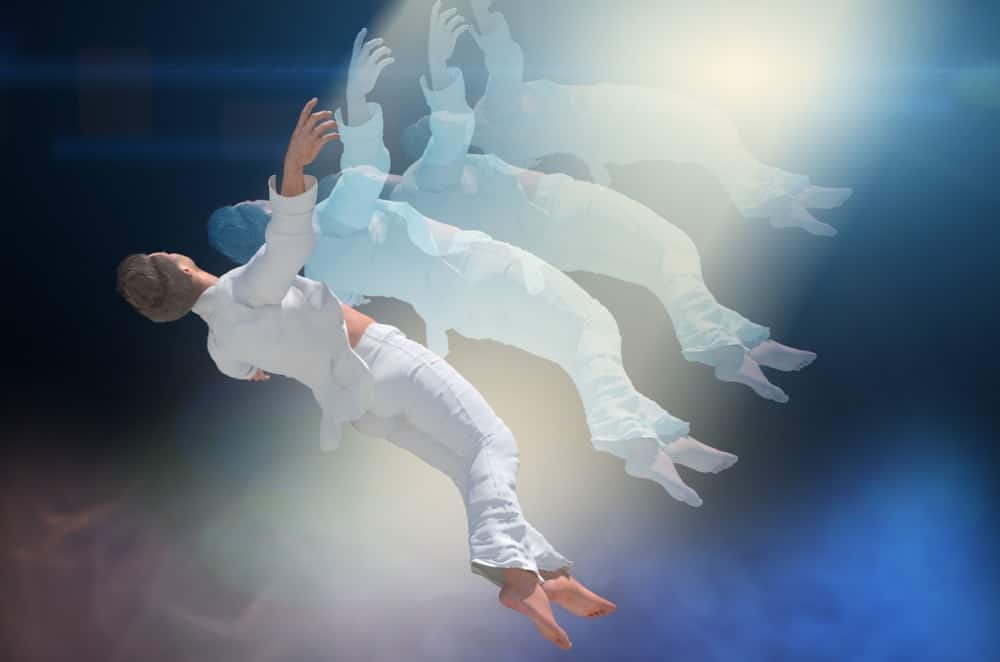
Asher Masoud Biton, a resident of Kiryat Shmona, suffered cardiac arrest and was clinically dead. While lying on a treatment table, his soul separated from his body and he experienced a life-altering journey to the World to Come. His remarkable story is backed by eyewitnesses, including the mayor of Kiryat Shemona and the emergency physician who pronounced him dead.
“There’s Nothing More We Can Do”
It was a Thursday in December 2008 when Nissim Malka, then mayor of Kiryat Shemona, received a frantic phone call: his longtime friend Asher Biton was in critical condition. Malka dropped everything and rushed to the clinic. There, he found Biton’s relatives outside, shaken up and full of questions. When he asked for an update, they told him the doctors were inside, trying to revive Asher with electric shocks.
Inside, Malka spoke with Dr. Boris Sidlakovsky, the ER physician called in after Biton collapsed. Dr. Sidlakovsky told him bluntly: Biton wasn’t responding, there was nothing more they could do, and they were preparing to disconnect him from life support.
Malka, who is also an ordained rabbi, refused to give up. He immediately called his friend, Rabbi Chaim Amram Afargan from Kiryat Ata, and asked for a blessing. “The rabbi told me: ‘Yes, it’s a serious situation, but tell the doctors not to give up. Tell them to administer one more shock, the seventh,'” Malka recounts.
Malka hurried back to Dr. Sidlakovsky, who had just informed the family that Biton had passed away and would soon be disconnected. The room was filled with tears, but Malka pleaded: “Please, just one more shock.” At first, the doctor refused. But Malka insisted: “You have nothing to lose. Try one last time.”
Dr. Sidlakovsky returned and administered the seventh shock.
Amazingly, Biton’s pulse came back.
The doctor emerged in disbelief. “There’s a heartbeat,” he said, “but he’ll likely be brain-dead. His brain has been without oxygen for too long.” Malka responded, “We’ll keep praying. With God’s help, he’ll return fully.”
Biton was rushed to the Ziv Medical Center in Tzfat. At first, he remained unresponsive. The family called Rabbi Sheinberger in Jerusalem, who instructed them to perform a pidyon nefesh (soul-redemption ceremony) with a quorum of ten men. The family and close friends formed a minyan (quorum), asked the doctors for permission, and performed the ritual in the hospital.
Forty-eight hours later, doctors reported that Biton was beginning to move his hands and feet.
Days later, Nissim Malka received a phone call from Asher Biton himself.
“I was in shock,” Malka said. “He told me he had seen and heard everything while he was unconscious. He quoted exactly what I had said to the doctors, described who was crying and what they said, even my private phone conversation with the rabbis. How could he have known these things?”
The View from Above
Asher Masoud Biton shares his side of the story:
“Suddenly, I felt like something was being pulled from my body, and then my soul rose above. I looked down and saw my body on the treatment table. I understood I had gone into cardiac arrest. My body was completely blue. I saw the Magen David Adom paramedics arrive. I watched them call my cousin Lydia to tell her I was in critical condition, and she immediately rushed over from work.”
“From above, I saw three doctors working on me: Dr. Nadim, Dr. Heller, and Dr. Boris Sidlakovsky. They were preparing to shock me.”
“Then I saw something terrifying: the Angel of Death approached me and gave me two drops of the death drug. His entire body was made of eyes. I experienced a sense of dread and fear that defies description. Only someone who’s been through it can understand. I felt the electric shocks. One after another-four, five, six-and then: Baruch Dayan HaEmet (“Blessed is the True Judge,” a blessing recited upon hearing that someone passed away). I have left this world.”
“My cousin Makhlouf, who works with me, jumped on my lifeless body and cried, ‘Masoud, my brother! You left me alone! I beg you! Please forgive me!’ The doctor came out and told them, ‘There’s nothing more we can do.’ I was gone.”
“I saw Yitzchak Kakon, head of the local religious council, sitting and weeping. I saw Mayor Nissim Malka trembling as he called Rabbi Amram Afargan and asked for a blessing, hoping for a miracle. The rabbi told him: ‘He hasn’t died yet, but he’s crossing into the next world. Give him one more shock. He’ll come back.’ That was the seventh.”
“Malka begged Dr. Sidlakovsky, who said, ‘What for? There’s no heartbeat, no breathing, the heart stopped two to three minutes ago.’ But Malka replied, ‘Do it anyway.’ They turned up the voltage and gave me one final, massive shock. I saw my body literally jump. And then, there was a pulse. Everyone rejoiced: ‘There’s a heartbeat! There’s a heartbeat!'”
Judgment in the Heavenly Court
Biton explains that while his body had technically returned to life, his soul continued its journey upward. During the 45 minutes in which he was being transferred to the hospital-and resuscitated again en route-he experienced something entirely different. In the next world, he says, time doesn’t exist.
“After my soul left my body, I felt a great wind pulling me upward. I saw a tunnel. It was hard to travel through the darkness, but I saw a small dot of light. Hands reached out to guide me upward. The light grew and grew. It was not like any light I have ever seen. It was infinite.”
“Then I arrived. I saw four beings dressed in black, their eyes filled with fiery hatred. I trembled. I didn’t know where they were taking me, but I knew I was somewhere holy. Then I heard: ‘Masoud Biton, come to the court!’ And I saw groups of people in black robes. These were the sins I had committed in my lifetime.”
“We entered the Heavenly Court. Four judges sat in white robes, two from generations past, two still living today. I am not permitted to say who they are. As they stared at me, my files began to arrive.”
“The court is not where God’s mercy appears first. Mercy enters later. First, they confront you with your sins so you truly grasp their gravity.”
“Next, four very small children arrived. They looked at the figures in black and pleaded for my merits to be included in the trial. Everyone I had ever helped stood by me. Only then did I begin to feel calmer.”
“They showed me a film from my birth until the moment of death. Then I saw seventy-one judges who had faces like angels, like a great Sanhedrin. They judged me detail by detail, from birth to bar mitzvah, to my wedding and beyond. On Earth, I may have thought no one saw me. But in the next world, everything is recorded, even the most private moments.”
The Final Verdict and a Glimpse of Paradise
“Then we reached the scales,” Biton recounts. “Just as described in the Talmud, they placed my sins on one side and my mitzvot and good deeds on the other. Sadly, at first, the sins outweighed the merits.”
“Then two of the angels in white brought a large cup filled with water. I asked what it was. They answered: ‘These are all your tears from the day you were born until today.’ Then they brought all the suffering I had endured in life and added it to the side of merit. The scales finally tipped in favor of my good deeds.”
“At that point, an announcement was made: ‘Masoud Biton, you are summoned to the Supreme Court.’ This was the final stage. After that, they showed me my place in the World to Come.”
“Two people dressed in white led me to the lower level of the Garden of Eden. It is a place of eternal joy; every second is a pleasure.”
“I saw my parents, my uncle, and my brother Eli. They were all happy, asking, ‘Why have you come here?’ I saw rows of righteous people and rabbis, sitting with crowns on their heads, studying Torah and Talmud.”
“There’s no way to describe the Garden of Eden in physical terms. It’s entirely spiritual. I didn’t want to leave. The beauty, the pleasure-it was unimaginable. Anyone who tries to describe it in human terms is a fool. If you haven’t been there, you can’t understand.”
“Finally, one of the judges-my grandfather Masoud, for whom I was named-looked at me and said, ‘I don’t want to see you here yet.’ He tapped me on the forehead three times, and I returned through the same tunnel.”
“There are more things I saw that I’m not permitted to share. I’ve only told you the general story. The rest, I must keep in the world it belongs to, the World of Truth.”