
Sadness, despair, and depression have never been as widespread as they are in our generation. But instead of battling them directly, we can choose a different path; a path that brings light to the soul. In the words of Martin Luther King Jr.: "Darkness cannot put out darkness; only light can do that." We can begin to overcome sadness by filling our lives with things that spark light, joy, and meaning, like uplifting thoughts, deep and meaningful relationships, and a sense of purpose that gives our lives direction and depth.
The Pursuit Of Happiness
Mild sadness, lack of satisfaction, low energy, and a general lackluster sense of indifference have become common experiences in today’s world. Countless books that promise to transform our lives have been written, yet effective and authentic solutions remain elusive. How can we achieve genuine happiness? Is there a real, effective path to lasting joy?
According to a report by the World Health Organization, nearly 350 million people worldwide suffer from depression, an 18% increase compared to the previous decade. Dr. Dan Chisholm from the WHO’s Mental Health Division estimates that an additional 250 million people around the world suffer from anxiety, panic attacks, various phobias, obsessive-compulsive behaviors, and post-traumatic stress disorders.
The numbers speak for themselves. Humanity is more depressed today than ever before. Tens of millions in the United States alone rely on medication for anxiety and depression. In the UK, a Minister for Loneliness was appointed. Each year, countless self-help books are published, all promising to improve our lives. Despair, now the third most common illness globally, has become widespread. And contrary to the assumption that this is a Western phenomenon, the WHO report shows high depression rates even in Southeast Asia.
One hallmark of modernity is the idea of progress—the belief that science, technology, and social change will make the world a better, happier, more productive place. We were taught to believe that household appliances would give us more free time, phones would deepen our social connections, and computers would speed up everything. And while there’s no denying that technology has improved our quality of life in many ways, we must ask: has it actually made us happier?
The data suggests otherwise. As the world becomes more advanced, people are becoming more anxious, overloaded, and stressed. Depression, fear, worry, and lack of joy are now integral parts of life for many people in modern society. The pursuit of happiness is no longer limited to Eastern spiritual seekers. The explosion of workshops, seminars, and life coaches proves that the search is everywhere. Even academia has taken notice: the field of “happiness studies” has flourished in recent years, and top universities now offer courses in “positive psychology” to help students live happier lives.
Happiness Is a Matter of Perspective
Positive psychology teaches that happiness results from focusing on our strengths, cultivating positive emotions, and finding meaning in life. This doesn’t mean ignoring pain and difficulty, but rather shifting focus to what is working. Doing so boosts emotional resilience, enhances our ability to handle challenges, and ultimately increases our well-being.
Dr. Tal Ben-Shahar, a leading researcher in the field, launched a course at Harvard in 2006 that became the university’s most popular class, with over 800 students. Clearly, everyone is looking for happiness.
In an interview, Ben-Shahar explained that happy people tend to have meaning in their lives, whether through work or family. They care for their bodies and their minds, exercise regularly, and eat well. They invest in close relationships and accept both their positive and painful emotions. They understand that the good life includes both highs and lows.
What Brings Us the Most Happiness?
Many studies have investigated the sources of happiness. At the top of the list is this key factor: close relationships. People who reported being close to family, friends, or community were not only happier but also healthier and more likely to live longer. But it’s not just the number of relationships that matters. The quality of these relationships counts, too. Strong relationships protect both body and mind.
Interestingly, wealth, fame, and status do not lead to lasting happiness. No one on their deathbed regrets not spending more time at the office or chasing another contract. It often takes years to realize that what truly matters are the people in our lives and the sense of meaning that guides us. Enjoyment and pleasure can contribute to happiness, but only when they exist within a broader framework of purpose.
Expert Advice for a Happier Life
Cultivate meaningful relationships. Ben-Shahar says the number one predictor of happiness is quality time with people we love and who love us. And that means real time, not virtual conversations or distracted phone calls.
Be generous. Giving is a powerful source of happiness. A study of over 400 elderly couples found that those who provided emotional or practical support to others were 40% to 60% less likely to die within the next five years. Generosity creates joy and leaves a lasting impact.
Practice gratitude. Regular gratitude raises happiness, health, and success levels. Even small, daily moments of thankfulness can shift our mindset and bring more positivity into our lives.
Reflect on your life. Meaning gives us direction. Nietzsche wrote, “He who has a why to live can bear almost any how.” Finding meaning is a process. Start by asking what values matter to you, what brings purpose to your days, and why you do what you do.
Engage your mind. Our brains need intellectual nourishment. Reading, learning, and thinking deeply help us grow and thrive.
Nurture your body and hobbies. The soul and mind may be central, but the body enables them to function. Exercise, sleep, nutrition, and creative hobbies contribute to holistic well-being.
Use your gifts to give back. When we use our talents in the service of others, we experience a sense of fulfillment and purpose. Giving, especially through our unique strengths, brings joy and meaning.
Seek professional help when needed. Medication should not be the first option, but in cases of severe depression or suicidal thoughts, it is crucial to seek professional guidance.
Judaism and the Pursuit of Happiness
Interestingly, many expert recommendations align closely with the Jewish way of life.
At its core, Judaism is rooted in faith in the Creator Who lovingly watches over each individual. This belief brings calm and comfort, reducing the burden of anxiety and fear. The knowledge that nothing is random and that each person is guided by Divine Providence through a unique journey offers a deep sense of peace and perspective, even in times of struggle.
Judaism also encourages positive thinking: “Everything that God does, He does for the best” (Berachot 60b). Judaism teaches us to judge others favorably and to find goodness even in difficulty. Tehillim (the Book of Psalms), traditionally attributed to King David—who endured immense suffering in his life—is filled with affirmations of trust and hope, such as “Only goodness and kindness shall follow me all the days of my life” and “Even though I walk through the valley of the shadow of death, I will fear no evil, for You are with me.”
Family plays a central role in Jewish life. Shabbat provides built-in weekly time for togetherness, with meals, songs, and shared wisdom. A strong emphasis on community is woven into Jewish life through prayer services, study groups, and countless lifecycle events like weddings, circumcisions, and Bar/Bat Mitzvah celebrations, among other things.
Judaism also encourages acts of kindness and giving. Even someone who lives on charity is expected to give charity. This not only helps others but also affirms the dignity and self-worth of the giver.
Gratitude is a cornerstone of Jewish practice. A Jew begins each day with the words “Modeh Ani” (I give thanks), and continues to express gratitude throughout the day for food, health, clothing, and the beauty he encounters, among other things. Dr. Tal Ben-Shahar himself noted the significance of this: “The first thing a religious Jew says in the morning is ‘thanks.’ There’s deep value in starting the day with gratitude.”
Self-reflection is also essential. Whether through personal prayer, weekly introspection, or the intense soul-searching of Yom Kippur, Judaism encourages regular evaluation of our lives and values. Torah study often leads to profound moral and existential questions, prompting deeper thought and growth.
Jewish tradition dedicates significant time to exploring life’s big questions: the purpose of existence, the afterlife, ethics, and the soul. Torah learning sharpens the intellect, shapes moral vision, and deepens spiritual awareness.
Finally, Judaism teaches that each of us possesses a holy soul—a spiritual core that longs for meaning and connection. Sadness and despair often arise when we neglect this inner voice. Prayer, mitzvot (Divine commandments), and Torah study awaken the soul and elevate the entire person, opening the door to deep and lasting joy.
The soul is nourished by choosing good, resisting selfish impulses, learning, giving, and living with purpose. Until it receives this nourishment, it remains restless, much like a hungry person whose body cries out for food. We can only feel whole when our soul is fulfilled.
At its heart, Judaism offers a powerful message. Life is meaningful. Our actions matter. We are here for a reason, and that reason is rooted in something eternal. A person who lives with faith, gives generously, seeks wisdom, and stays connected to others and to God can experience a deep, sustaining, and authentic sense of happiness.
The World Happiness Report is an annual publication sponsored by the United Nations Sustainable Development Solutions Network that ranks 147 countries by their citizens’ reported levels of happiness. The index measures factors such as social security, trust in others, reliable governance, safety, and health. Four of the main criteria include having someone to rely on, the sense of freedom to make life choices, generosity, and trust.
Despite the criticism often leveled by the rest of the world and Israel’s complex security situation and internal social divides, the most recent report ranked Israel an impressive 8th place worldwide. In contrast, the four top countries—Finland, Denmark, Iceland, and Sweden—are Scandinavian nations that do not face any of these types of challenges.
At Harvard University, the longest-running study on happiness has been underway for over 85 years. In 1938, 724 men from Boston were selected to join the study. Since then, every two years, researchers have tracked their emotional well-being, quality of life, relationships, and many other details. Most of the original participants have since passed away, but a handful are still part of the study today.
Robert Waldinger, the fourth director of the research team, says the conclusions are unmistakable: it is not money, fame, or wealth that keep us happy and healthy, but good relationships. “People who are more socially connected to family, friends, and community are happier, physically healthier, and live longer than those who are less connected. The experience of loneliness is toxic.”
Beyond the rating assigned to Israel by the World Happiness Report, it is instructive to zoom in on what is happening within Israel too. According to a survey conducted by Israel’s Central Bureau of Statistics that measured Israelis’ satisfaction with their lives, the happiest cities in Israel are Beit Shemesh and Bnei Brak, both home to large ultra-Orthodox populations. Surprisingly, people who do not travel abroad for vacation, do not wear designer clothing, and primarily rely on public transportation reported higher levels of happiness and joy than the rest of the population. How so? Researchers explain that religious faith provides life with meaning, and this sense of meaning is critical for achieving happiness.
They also highlight other religious values and lifestyle choices that contribute to higher levels of happiness. Computers, cellphones, and television are not central to their daily lives, and many studies have found that these devices contribute to depression. In addition, the observance of Shabbat strengthens family bonds and preserves the family unit. Their religious faith also steers them away from an endless pursuit of material possessions or constant upgrades.
A study funded by the National Institute of Health found that in wealthy countries—such as the United States and France—rates of depression are the highest, while in poorer countries like India and Mexico, depression rates are much lower. As the saying goes: Money can’t buy happiness.
In a report entitled “The Profile of the Happy Person” produced by Israel’s Central Bureau of Statistics, a clear connection was found between the level of religiosity and life satisfaction. The survey revealed that the more religious a person is, the greater their satisfaction with life. It also found that although the average income of ultra-Orthodox Jews is lower than that of secular Jews, the ultra-Orthodox report higher satisfaction with their financial situation. Another striking finding was that 72% of ultra-Orthodox respondents—despite engaging less in sports and physical activity—rated their health as very good, compared to only 43% of secular respondents.
“Think good, it will be good.” These famous words were said by Rabbi Menachem Mendel Schneersohn. When one of his followers faced a crisis, he urged him to focus on positive thoughts, assuring him that such faith could overturn even a harsh decree. This was not meant as a magical formula, but as a call to strengthen one’s trust in God. When a person believes that the Creator can help them against all odds, he awakens special Divine providence. As if to say: “Just as you chose to believe in Me beyond the limits of nature, so I will transcend nature for you.”
Modern coaching often repeats the mantra “Our thoughts create our reality,” but from a Jewish perspective, the principle goes deeper. True change comes not from optimism alone, but from cultivating unshakable trust in God. When a person places complete confidence in Him and reaches a state of inner calm, this very trust becomes the channel through which blessing and goodness flow.
Rabbeinu Bachya ben Asher explains it this way in his book Kad Hakemach: “Trust in God means knowing in one’s heart that everything is in His hands. He can change nature, alter fortune; He can do anything, and nothing stands in His way. Even if many troubles come, salvation is always near, for He is all-powerful. True trust leaves no room for doubt. Even in hardship, a person strengthens himself in serving God and continues to rely on Him fully.”
“It is a great mitzvah to be in a state of joy at all times” is perhaps the most famous teaching of Rabbi Nachman of Breslov. But why did Rabbi Nachman place such profound importance on joy? In Chasidic thought, joy is seen as the most essential trait a person can cultivate, for without it, an individual is drained of vitality and falls into sadness and despair. The Chasidim note: “Though sadness is not a sin, it can carry a person to depths that no sin could ever take him.” In other words, sadness leads a person into the darkest of places.
Joy, by contrast, is the driving force that enables a person to function at their best in every area of life. It awakens motivation, empowers one to attempt what might otherwise seem impossible, and unlocks the hidden potential within.
The World Happiness Report is an annual publication sponsored by the United Nations Sustainable Development Solutions Network that ranks 147 countries by their citizens’ reported levels of happiness. The index measures factors such as social security, trust in others, reliable governance, safety, and health. Four of the main criteria include having someone to rely on, the sense of freedom to make life choices, generosity, and trust.
Despite the criticism often leveled by the rest of the world and Israel’s complex security situation and internal social divides, the most recent report ranked Israel an impressive 8th place worldwide. In contrast, the four top countries—Finland, Denmark, Iceland, and Sweden—are Scandinavian nations that do not face any of these types of challenges.
Beyond the rating assigned to Israel by the World Happiness Report, it is instructive to zoom in on what is happening within Israel too. According to a survey conducted by Israel’s Central Bureau of Statistics that measured Israelis’ satisfaction with their lives, the happiest cities in Israel are Beit Shemesh and Bnei Brak, both home to large ultra-Orthodox populations. Surprisingly, people who do not travel abroad for vacation, do not wear designer clothing, and primarily rely on public transportation reported higher levels of happiness and joy than the rest of the population. How so? Researchers explain that religious faith provides life with meaning, and this sense of meaning is critical for achieving happiness.
They also highlight other religious values and lifestyle choices that contribute to higher levels of happiness. Computers, cellphones, and television are not central to their daily lives, and many studies have found that these devices contribute to depression. In addition, the observance of Shabbat strengthens family bonds and preserves the family unit. Their religious faith also steers them away from an endless pursuit of material possessions or constant upgrades.
A study funded by the National Institute of Health found that in wealthy countries—such as the United States and France—rates of depression are the highest, while in poorer countries like India and Mexico, depression rates are much lower. As the saying goes: Money can’t buy happiness.
In a report entitled “The Profile of the Happy Person” produced by Israel’s Central Bureau of Statistics, a clear connection was found between the level of religiosity and life satisfaction. The survey revealed that the more religious a person is, the greater their satisfaction with life. It also found that although the average income of ultra-Orthodox Jews is lower than that of secular Jews, the ultra-Orthodox report higher satisfaction with their financial situation. Another striking finding was that 72% of ultra-Orthodox respondents—despite engaging less in sports and physical activity—rated their health as very good, compared to only 43% of secular respondents.
“It is a great mitzvah to be in a state of joy at all times” is perhaps the most famous teaching of Rabbi Nachman of Breslov. But why did Rabbi Nachman place such profound importance on joy? In Chasidic thought, joy is seen as the most essential trait a person can cultivate, for without it, an individual is drained of vitality and falls into sadness and despair. The Chasidim note: “Though sadness is not a sin, it can carry a person to depths that no sin could ever take him.” In other words, sadness leads a person into the darkest of places.
Joy, by contrast, is the driving force that enables a person to function at their best in every area of life. It awakens motivation, empowers one to attempt what might otherwise seem impossible, and unlocks the hidden potential within.
At Harvard University, the longest-running study on happiness has been underway for over 85 years. In 1938, 724 men from Boston were selected to join the study. Since then, every two years, researchers have tracked their emotional well-being, quality of life, relationships, and many other details. Most of the original participants have since passed away, but a handful are still part of the study today.
Robert Waldinger, the fourth director of the research team, says the conclusions are unmistakable: it is not money, fame, or wealth that keep us happy and healthy, but good relationships. “People who are more socially connected to family, friends, and community are happier, physically healthier, and live longer than those who are less connected. The experience of loneliness is toxic.”
“Think good, it will be good.” These famous words were said by Rabbi Menachem Mendel Schneersohn. When one of his followers faced a crisis, he urged him to focus on positive thoughts, assuring him that such faith could overturn even a harsh decree. This was not meant as a magical formula, but as a call to strengthen one’s trust in God. When a person believes that the Creator can help them against all odds, he awakens special Divine providence. As if to say: “Just as you chose to believe in Me beyond the limits of nature, so I will transcend nature for you.”
Modern coaching often repeats the mantra “Our thoughts create our reality,” but from a Jewish perspective, the principle goes deeper. True change comes not from optimism alone, but from cultivating unshakable trust in God. When a person places complete confidence in Him and reaches a state of inner calm, this very trust becomes the channel through which blessing and goodness flow.
Rabbeinu Bachya ben Asher explains it this way in his book Kad Hakemach: “Trust in God means knowing in one’s heart that everything is in His hands. He can change nature, alter fortune; He can do anything, and nothing stands in His way. Even if many troubles come, salvation is always near, for He is all-powerful. True trust leaves no room for doubt. Even in hardship, a person strengthens himself in serving God and continues to rely on Him fully.”
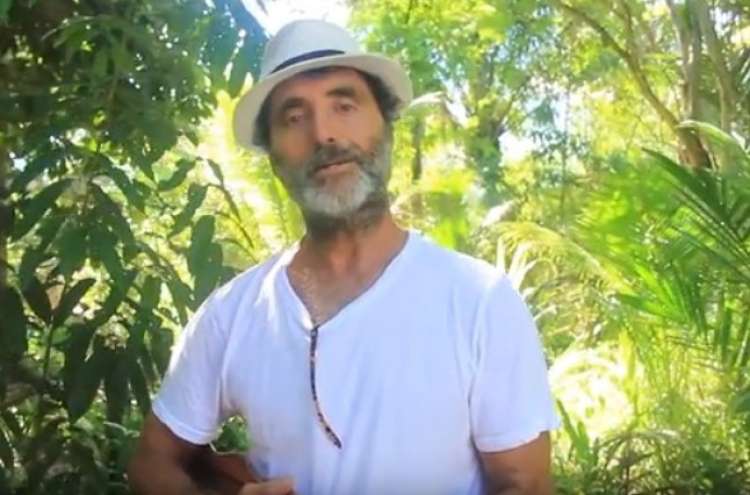
From near-death over the Mediterranean to spiritual rebirth in Jerusalem, Aryeh Boni's incredible journey spans parachute jumps, shipwrecks, jungle fasts, and one unforgettable stare-down with a whale.
Aryeh Boni spent most of his life chasing happiness. In this rare personal interview, he opens up about the night his boat ran aground off the Egyptian coast, the spiritual awakening he experienced in the jungles of Brazil, and the moment he looked a giant whale straight in the eye. Most importantly, he shares how he finally found what he was looking for.
“My father, of blessed memory, worked for the Israeli dairy company Tnuva,” Aryeh begins. “My mother worked nights as a seamstress. I can still hear the clatter of the sewing machine. We were a traditional family, poor, packed tightly in a small home, with several kids sharing a single bed. But there was joy. We played outside all day with the neighborhood kids, something you hardly see anymore.
“My parents enrolled me in a vocational school, but I didn’t last there. Then I tried a program that prepared students for service in the Navy, but I dropped out of that too. I was searching for something.”
A friend suggested volunteering for the paratroopers. “I signed up and eventually became a paratrooper instructor. I even did night jumps with former Israeli Chief of Staff Rafael Eitan (Raful). When I’d return to Afula with my wings, people treated me with respect. But it came with a price.
“I stared death in the face more than once. One time, during a jump, my parachute didn’t open. You can’t describe the terror of plummeting through the sky with nothing slowing your fall. I pulled the reserve chute, but it got tangled with the first. I was falling faster and faster, and all I could do was turn to God. In a moment like this, everything else fades into the background.
“By some miracle, something finally opened, barely. I hit the ground with terrifying force. I rolled as we’d been trained, and somehow survived.
“I loved parachuting. I thought it would bring me happiness and a sense of wholeness. But like many things I pursued in life, it was just a fleeting high. From a young age, I was searching for something real, something lasting. I made a lot of mistakes along the way and paid dearly for them. Only recently, thank God, I found what I was looking for in the world of Torah.”
Trapped in Enemy Territory
Aryeh’s restless search continued after his army service. “I enrolled in the Wingate Institute, became certified as a gym trainer and lifeguard, and worked in schools and summer camps. Eventually, I moved to Eilat and entered the hotel industry. I traveled abroad often and also opened a pre-army prep group for combat units through the municipality. Life was intense.
“That’s when I met Nicole, my first wife, and the mother of Yaniv—my son who now studies with me in yeshiva. Nicole was a German who came to Israel to research the Holocaust. She became so connected to the country that she decided to stay and undergo a full Orthodox conversion. I was working in HR at a large hotel, and I was asked to cut employee wages. I refused and left the industry.
“My next stop in the search for happiness was the sea. I worked at the Dolphin Reef and learned how to sail a yacht. After a few months, I bought a boat and set sail for Turkey with a friend. But a hole opened in the hull, and we began to sink. We braced for evacuation and prayed to survive.
“By sheer miracle, we reached a shore under Egyptian control. An Egyptian missile boat approached. We feared for our lives. At first, the soldiers yelled at us and said we had no right to be there, but then they softened. They gave us food and let us make a phone call. A friend from Eilat came to rescue us with his boat. Once again, my life was spared.”
Then came the whale.
“One time, while sailing deep at sea, a whale shark with green spots approached us. It was enormous, almost terrifying. I lowered a smaller boat from the deck and got close. I even tugged its tail. Suddenly, it turned and looked me straight in the eye. I was paralyzed with fear. If it had moved even a little, I wouldn’t be here today. But thank God, it turned and vanished into the depths of the sea.”
From Hamburg to the Jungles of Brazil
Aryeh and his wife were both working in tourism, but times were tough. “We had three kids and couldn’t make ends meet. I wanted a new challenge, so we sold the boat and moved to Hamburg, Germany.
“We pulled the kids out of school and started over. But it was awful. I didn’t know anyone, I didn’t speak the language, and I hated the cold. I was used to the sun in Eilat. I stayed home with the kids while she worked, and I struggled daily, even grocery shopping was a battle.
“Our relationship deteriorated and eventually we divorced. Unsure what to do, I scraped together what I had and took the kids on a trip along the German coast. On one beach, I heard someone speaking Hebrew. I introduced myself, told him I had no work, and he offered me a job selling jewelry along the coast. For six months I worked nonstop—sleeping in my car, showering with bottles of water—but I made tens of thousands of euros per season. For five years, I did this, half a year at a time.”
Still, the itch to move on returned.
“I was done with Germany, so I packed a small bag, some clothes, shampoo, and €50,000 in cash, and flew to Brazil. No language, no contacts. I just wanted to buy land and settle down.
“I heard Israelis talking about a place called Piracanga, an ecological, vegan, spiritual village. It sounded adventurous, so I set off: a long flight, a jeep ride, a big boat, a canoe, another jeep—finally, we arrived.
“At first, I loved it. Thirty families, a few singles, singing, yoga, and an exquisite environment. I quickly bought a house. But more than anything, I began to sense that real happiness might come from something spiritual. I had tried everything physical, and it never filled the void.
“So I tried a 21-day fast: one week without food or water, then two weeks of only fruit juice. It was powerful, but still not the peace I was seeking.
“Then I heard about a course on abundance. I signed up. But when they found out I was Jewish, they told me, ‘You Jews don’t need this course. You already have abundance. There’s nothing we can teach you.’
“Locals kept telling me, ‘The trees around your house have never grown like this. It’s because you’re Jewish.’ They respected Jews and Torah. It made me start searching inward.”
“What Does the Shema Say?”
“Some of the people there said they were descended from Marranos (Jews forced to convert to Christianity). They asked me what a yarmulke is and why we wear it. I had no idea. I had my father’s prayer shawl and tefillin, but little knowledge and little practice.
“So I started listening to rabbinic lectures online and repeating what I heard to them. My son, who eventually joined me there, translated for me. Every Shabbat, I gave a talk. We would conduct a Friday night service, make soup for the meal—I was living in paradise, with coconuts, surfing, and plenty of money—but something was still missing.
“When I learned Torah, I felt real joy.
“With Pesach coming, I knew we couldn’t observe it properly at home. So I took my kids to a Chabad house in Salvador. We celebrated the Seder there. My son was so moved that he decided to stay. He lived with them, prayed, cooked, and soon moved to a yeshiva in São Paulo.”
That stirred something deep in Aryeh.
“I felt a longing I hadn’t felt in years. I realized that if I wanted to live as a real Jew, I had to come back to Israel. I left everything in Brazil and flew back. I returned to Eilat, then my son told me he wanted to learn in a yeshiva in Jerusalem. I told him, ‘If you’re going, I’m going with you. I’m all in.’
“We came to Yeshivat Ashrei Ha’ish in Jerusalem. The day we visited was my 60th birthday. We stayed for Shabbat, and never left.
“It’s not always easy. I’m getting used to the intense learning schedule. I’m still a tourist with no health insurance. I support myself by renting out my apartment in Eilat. I could go back to working in one of my old fields, but now that I’ve tasted the sweetness of Torah, that’s what I want.
“I’ve been through so much: joy, pain, divorce, survival. But now, after everything that I’ve done, I’m in yeshiva in Jerusalem, and I feel like I’m on top of the world.
“What was I chasing all those years? Money? Pleasure? Adventure? Is that really the legacy I want to leave my children? The ability to sail a yacht or swim with whales? No.
“What does the Shema say? ‘And you shall teach them to your children, and speak of them…’ That’s the only thing a father must pass on. There’s nothing else out there. There’s nothing new under the sun. In the end, you come home and realize that the Torah is everything.
“It doesn’t matter if your child becomes a doctor or engineer, as long as he follows God’s path. May there be more fathers and sons like us, who leave behind the secular world and learn together in yeshiva. It’s not always easy. But it’s the sweetest, most peaceful life I’ve ever known.”