
The War of Gog and Magog
Few periods in human imagination have sparked more speculation and dramatic screenplays than the End of Days, a period often referred to as “the apocalypse.” Is it just a Hollywood innovation, or does Jewish tradition describe a real, inevitable upheaval? What exactly is meant to happen? What will prompt this final war? Who will survive it, and what will the world look like afterward?
The Bigger Picture
According to Judaism, creation itself was designed to bestow eternal good upon humanity through a process of self-refinement and moral choice. Each person’s life is an opportunity to choose good over evil and align with God’s will. At the end of a person’s life, the soul enters the spiritual realm, stands before the Heavenly Court, and is judged. Those souls that have been completely refined ascend to the Garden of Eden, while others undergo a rehabilitation process designed to help them fulfill their ultimate mission.
It is instructive to note that the Garden of Eden is only a temporary station. This world, in its current form, was given a limited span of existence, and within that window, each individual and humanity as a whole must achieve its spiritual purpose. Once the final date arrives, symbolized by the coming of Mashiach and redemption, the gates will close. No further spiritual progress will be possible.
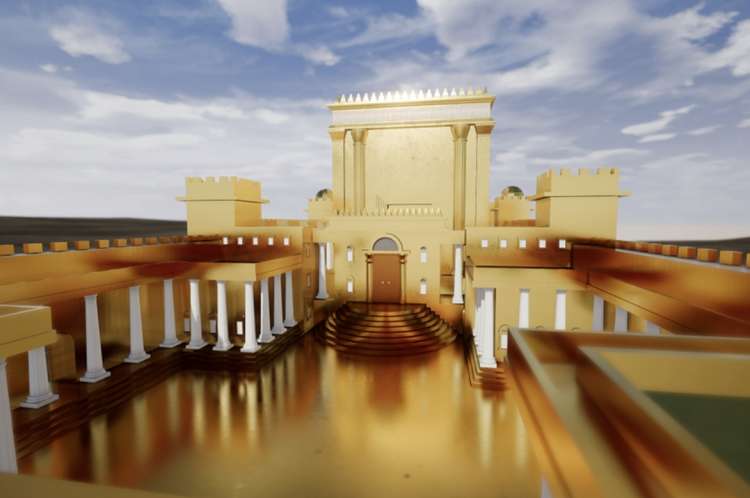
The Sages teach that this period will not exceed 6,000 years. At its conclusion, a series of revolutionary events will unfold: the war of Gog and Magog, the coming of Mashiach, the resurrection of the dead, and the rebuilding of the Third Temple. Afterward, the world will enter a new stage, an era of eternal life in which the physical exists, but the spiritual dimension reigns supreme.
What Is the War of Gog and Magog?
Unlike fictional disaster movies that envision asteroids, tsunamis, or global plagues, the war of Gog and Magog is presented by the prophets as a real event that will shake the entire world.
The prophet Yechezkel foretold that this war would come only after the Jewish people return to their land: “After many days you will be summoned; in the latter years you will come against a land restored from the sword, gathered from many nations, upon the mountains of Israel that had long lain desolate. They were brought out from the nations, and now all dwell securely” (Yechezkel 38:8).
According to the prophets, the war will be triggered by the demand to surrender dominion and control of Yerushalayim. Nations identified with Edom (Christianity) will join forces with nations identified with Yishmael (Islam) and form a coalition against Israel: “I will gather all the nations against Yerushalayim to wage war” (Zechariah 14:2). Israel will refuse the nations’ demand, sparking a global conflict. Internal rifts among the nations will lead them to fight each other as well, until the entire world is engulfed in war.
Yerushalayim will be at the center of the storm, and its streets will flow with blood. This will not be like the world wars of the 20th century. It will dwarf them in both scope and scale.
The Rise of Mashiach
Shortly before the war, a leader known as Mashiach ben Yosef will emerge but will be slain early in the conflict by a wicked figure named Armilus. The nation will mourn his death deeply (Zechariah 12:10). Later, Mashiach ben David will rise as the enduring leader of Israel. Gog, leading his armies, will come to Israel to fight against the Jewish people and Mashiach himself.
At that moment, there will be a devastating earthquake. Yechezkel describes: “On that day, there will be a great earthquake in the land of Israel…the mountains will be overturned, cliffs will collapse, and every wall will fall to the ground” (Yechezkel 38:18—20). Buildings will crumble, and the Mount of Olives will split in two, creating a valley through which some Jews from Yerushalayim will escape (Zechariah 14:4).
Then, toward evening, a bright light will appear (see Zechariah 14:7), and a terrifying plague will strike the nations: “Their flesh will rot while they stand on their feet; their eyes will rot in their sockets, and their tongues will rot in their mouths” (Zechariah 14:12). Commentators suggest this description may correspond to a chemical attack or a different unconventional weapon, though the specifics are unclear. Chaos will spread, with nations turning their swords on one another.
The Zohar adds that for twelve months after the war ends, the wounds sustained during battle will continue to resurface, and lingering illnesses and effects will continue to afflict humanity.
God Fights for Israel
Ultimately, Israel will not win this war through military strength. God Himself will bring plagues, hailstones, fire, sulfur, and internal strife upon the nations. They will succumb to devastating plagues that will cause them to lose limbs, among other injuries. Only one third of humanity will survive: “In all the land, says the Lord, two-thirds will be cut off and perish, but a third will be left” (Zechariah 13:8). The dead will be so numerous that it will take seven months to bury them (Yechezkel 39:12).
The surviving nations will recognize the God of Israel. Out of awe and repentance, they will help return the exiled Jews from across the globe back to their land (Rav Saadia Gaon, Emunot Ve’deot, 8:6).
A New World
The arrival of Mashiach ben David and the victory in war will be followed by the resurrection of the dead and the rebuilding of the Temple. Humanity will enter a new stage. At this point, there won’t be any more opportunities for spiritual refinement and growth. Our spiritual levels will remain fixed at what we achieved during our lifetimes. Everyone will receive their eternal reward, commensurate with the spiritual achievements they attained during their lifetimes. The soul will become dominant, and a person’s spiritual status will be readily apparent.
The world itself will become like an earthly Garden of Eden. Poverty will vanish and “all the delicacies will be as common as dust” (Mishneh Torah, Laws of Kings and Wars 12:5). Illness, pain, and death will disappear. Evil will be erased, replaced by harmony and peace. The Divine presence will be revealed in the world. As Yeshayahu prophesied, the nations of the world will seek out God and “Nation shall not lift sword against nation, nor shall they learn war anymore” (Yeshayahu 2:4).
Why Must There Be a Final War?
On the surface, the battle will be about control of Yerushalayim. And yet, beyond the objective impetus for war lies a deeper spiritual purpose.
First, the war will punish the nations that oppressed Israel for generations: “God of vengeance, shine forth! Rise up, Judge of the earth; repay the proud what they deserve” (Tehillim 94:1—2).
Second, through the signs and wonders that God will perform for Israel, God’s existence will be revealed to the world. Concurrently, the Jewish people will suffer greatly, and their pain will also serve as a wake-up call and spur the nation to return to Torah and renew its covenant with God.
Third, the war will distinguish between those who are faithful to God and those who are not. The Jewish people will face a time of great hardship. Though they will cry out to God, it will feel as if an iron wall stands between them and Him, with no help in sight. In this spiritual darkness, every individual will be tested: will he remain loyal to God despite the suffering and despair? Non-Jews will be judged by their adherence to the seven Noahide laws, while Jews will be judged by their devotion to the full 613 commandments. Those who remain steadfast in their faith through these trials will merit eternal life when God fully reveals Himself in the world. Like silver and gold purified in fire, this process will cleanse the Jewish people of all impurity.
Finally, it will be a war of ideologies. The nations will seek to sever humanity from God and from Divine morality, and reduce life to materialism alone. As King David wrote: “The kings of the earth rise up, and the rulers conspire together against the Lord and against His anointed: ‘Let us break their chains and cast away their cords from us'” (Tehillim 2:2—3). The war of Gog and Magog, at its core, is not just a physical war. It is a spiritual struggle between faith and denial, between soul and materialism.
Who Will Survive?
Not everyone will merit eternal life in the redeemed world. The prophet Daniel says: “Many of those who sleep in the dust of the earth shall awaken” (Daniel 12:2)—many, but not all. Only a third of humanity will survive the war.
The prophet Yoel explains: “And it shall come to pass that everyone who calls upon the name of the Lord shall be saved” (Yoel 3:5). To “call upon the name of the Lord” means living a life of Torah, observing mitzvot (Divine commandments), and exemplifying moral integrity. The Talmud adds: “What should a person do to be saved from the birth pangs of Mashiach? Engage in Torah study and acts of kindness” (Sanhedrin 98b).
With that, there is a critical principle regarding prophecy: negative prophecies are conditional. If we live in a way that contradicts our God-given purpose, we will face a difficult and painful path of correction. But if we live in accordance with that purpose, we will merit a path of kindness and mercy. The amount of suffering in the end of days depends on us. Redemption need not come through pain and loss. If we stray, redemption will come through suffering; if we return, it can come through mercy.
Will the Jewish people be harmed during the war of Gog and Magog? The prophets give two answers. The book of Daniel teaches that the Jewish people will not be harmed at all; the war’s sole purpose will be to punish Israel’s enemies. By contrast, the book of Zechariah foresees a time of great hardship for Israel, marked by troubles that are meant to stir the nation to self-reflection, repentance, and a return to the Torah and mitzvot (Divine commandments).
Which prophecy will come to pass, and whether the Jewish people will suffer in the war of Gog and Magog, depends entirely on us. It will be determined by the spiritual level we reach at that time: will we remain faithful to Torah and mitzvot? Or will Jewish tradition be reduced to no more than cultural folklore? Will our lives be guided by an authentic Jewish way of living, or indistinguishable from those of the nations?
The choice is ours.
Mashiach is a human being, a direct descendant of King David, who will one day lead the Jewish people. He will possess extraordinary wisdom—comparable to that of King Shlomo—and will be nearly equal to Moshe in prophetic insight. He will master both the Torah and secular knowledge, including the sciences, and will embody complete moral and personal perfection.
All the nations of the world will seek his guidance, and he will lead not only the Jewish people but the entire world. Under his leadership, division and conflict will give way to global unity, peace, and brotherhood.
The Rambam (Maimonides) explains:
If a king arises from the House of David, who studies Torah and fulfills the commandments like his ancestor David—according to both the Written and Oral Torah—and who compels all of Israel to follow the Torah and strengthens its observance, and he fights the battles of God, he is presumed to be the Mashiach. If he succeeds, defeats all the surrounding nations, rebuilds the Temple in its proper place, and gathers the dispersed of Israel, then he is certainly the Mashiach (Mishneh Torah, Laws of Kings and Wars, 11).
The Rambam continues:
The Messianic King will arise and restore the kingdom of David to its former glory. He will build the Temple and gather the exiles of Israel. In his days, all the laws will be reinstated as they were previously: sacrifices will be offered, Sabbatical years and Jubilees will be observed, all according to the commandments of the Torah.
Anyone who does not believe in him, or does not await his coming, denies not only the words of the prophets, but also the Torah and Moshe our teacher, for the Torah testifies about him, as it is written: ‘Then the Lord your God will restore your fortunes and have compassion on you, and He will gather you again from all the nations…Even if your exiles are at the ends of the heavens, from there the Lord your God will gather you and bring you back’ (Devarim 30:3—5).
These explicit words of the Torah include everything that was later prophesied by the prophets (Mishneh Torah, Laws of Kings and Wars, 11).
According to Jewish tradition, the wicked despots who persecuted the Jewish people throughout history and inflicted immense suffering upon the Jewish nation will be brought back to life for public judgment and retribution.
Until that point, their punishment will be hidden in Gehenna (the spiritual realm of judgment). But in the future, their downfall will be made visible to all. As the Zohar (Bereishit, 58) teaches:
Rabbi Shimon said: In the future, the Holy One, Blessed be He, will resurrect all the kings who brought suffering upon Israel and Jerusalem—among them Hadrian, Lupinus, Nebuchadnezzar, Sennacherib, and all the kings of the nations who destroyed His Temple. He will reinstate them as rulers once more, and the other nations will gather with them.
At that time, these tyrants will be judged openly, and their very existence—body and soul—will be utterly erased before the eyes of the world. This display of justice will be more than vengeance. It will serve as the ultimate proof that Divine justice endures and that Israel’s suffering has never been forgotten.
Just as a woman experiences labor pains—contractions that come and go before giving birth—so too, before the arrival of Mashiach, the world will go through its own “contractions.” In Jewish tradition, these are known as the “birth pangs of Mashiach.”
But what exactly are the birth pangs of Mashiach?
They are periods of hardship and turbulence meant not to punish, but to awaken. Their purpose is to shake us out of spiritual slumber, stir us from complacency, and propel us toward self-refinement and growth. These challenges are opportunities. They are calls to elevate ourselves, realign ourselves with our Divine purpose, and prepare for the era of eternal life that awaits.
The Sages handed down a series of prophetic signs to help identify the era preceding the arrival of Mashiach. Strikingly, many of these signs appear to have already come to pass in recent decades, in ways that sharply contrast with previous generations.
These signs, drawn from the Oral Torah, describe the period known as the “footsteps of Mashiach,” or the final stage of exile before redemption. According to the Mishnah and Talmud (Mishnah Sotah 9:15; Sotah 49b; Sanhedrin 97a), this time will be marked by dramatic societal and spiritual upheaval:
We don’t know the exact date of the war of Gog and Magog or the future redemption. However, Jewish tradition teaches that there is a predetermined final deadline for redemption, known by the Hebrew term “be’itah” (“in its appointed time”).
In addition to this final deadline, there are also earlier potential dates that hold the spiritual capacity for redemption. These moments are referred to by the Hebrew term “achishenah,” which means, “I will hasten it.” Redemption can take place during these earlier windows of opportunity, but only if the generation is deemed worthy, having refined its actions and elevated its moral and spiritual state.
This idea can be compared to driving on a highway. Along the route, there are several exits. Each exit represents a spiritually ripe time for redemption. If we arrive at one of these exits and are ready—if the generation has sufficiently prepared—we can take it. If not, we must continue down the highway until we inevitably reach the final destination: “be’itah,” the fixed time of redemption.
Mashiach is a human being, a direct descendant of King David, who will one day lead the Jewish people. He will possess extraordinary wisdom—comparable to that of King Shlomo—and will be nearly equal to Moshe in prophetic insight. He will master both the Torah and secular knowledge, including the sciences, and will embody complete moral and personal perfection.
All the nations of the world will seek his guidance, and he will lead not only the Jewish people but the entire world. Under his leadership, division and conflict will give way to global unity, peace, and brotherhood.
The Rambam (Maimonides) explains:
If a king arises from the House of David, who studies Torah and fulfills the commandments like his ancestor David—according to both the Written and Oral Torah—and who compels all of Israel to follow the Torah and strengthens its observance, and he fights the battles of God, he is presumed to be the Mashiach. If he succeeds, defeats all the surrounding nations, rebuilds the Temple in its proper place, and gathers the dispersed of Israel, then he is certainly the Mashiach (Mishneh Torah, Laws of Kings and Wars, 11).
The Rambam continues:
The Messianic King will arise and restore the kingdom of David to its former glory. He will build the Temple and gather the exiles of Israel. In his days, all the laws will be reinstated as they were previously: sacrifices will be offered, Sabbatical years and Jubilees will be observed, all according to the commandments of the Torah.
Anyone who does not believe in him, or does not await his coming, denies not only the words of the prophets, but also the Torah and Moshe our teacher, for the Torah testifies about him, as it is written: ‘Then the Lord your God will restore your fortunes and have compassion on you, and He will gather you again from all the nations…Even if your exiles are at the ends of the heavens, from there the Lord your God will gather you and bring you back’ (Devarim 30:3—5).
These explicit words of the Torah include everything that was later prophesied by the prophets (Mishneh Torah, Laws of Kings and Wars, 11).
Just as a woman experiences labor pains—contractions that come and go before giving birth—so too, before the arrival of Mashiach, the world will go through its own “contractions.” In Jewish tradition, these are known as the “birth pangs of Mashiach.”
But what exactly are the birth pangs of Mashiach?
They are periods of hardship and turbulence meant not to punish, but to awaken. Their purpose is to shake us out of spiritual slumber, stir us from complacency, and propel us toward self-refinement and growth. These challenges are opportunities. They are calls to elevate ourselves, realign ourselves with our Divine purpose, and prepare for the era of eternal life that awaits.
We don’t know the exact date of the war of Gog and Magog or the future redemption. However, Jewish tradition teaches that there is a predetermined final deadline for redemption, known by the Hebrew term “be’itah” (“in its appointed time”).
In addition to this final deadline, there are also earlier potential dates that hold the spiritual capacity for redemption. These moments are referred to by the Hebrew term “achishenah,” which means, “I will hasten it.” Redemption can take place during these earlier windows of opportunity, but only if the generation is deemed worthy, having refined its actions and elevated its moral and spiritual state.
This idea can be compared to driving on a highway. Along the route, there are several exits. Each exit represents a spiritually ripe time for redemption. If we arrive at one of these exits and are ready—if the generation has sufficiently prepared—we can take it. If not, we must continue down the highway until we inevitably reach the final destination: “be’itah,” the fixed time of redemption.
According to Jewish tradition, the wicked despots who persecuted the Jewish people throughout history and inflicted immense suffering upon the Jewish nation will be brought back to life for public judgment and retribution.
Until that point, their punishment will be hidden in Gehenna (the spiritual realm of judgment). But in the future, their downfall will be made visible to all. As the Zohar (Bereishit, 58) teaches:
Rabbi Shimon said: In the future, the Holy One, Blessed be He, will resurrect all the kings who brought suffering upon Israel and Jerusalem—among them Hadrian, Lupinus, Nebuchadnezzar, Sennacherib, and all the kings of the nations who destroyed His Temple. He will reinstate them as rulers once more, and the other nations will gather with them.
At that time, these tyrants will be judged openly, and their very existence—body and soul—will be utterly erased before the eyes of the world. This display of justice will be more than vengeance. It will serve as the ultimate proof that Divine justice endures and that Israel’s suffering has never been forgotten.
The Sages handed down a series of prophetic signs to help identify the era preceding the arrival of Mashiach. Strikingly, many of these signs appear to have already come to pass in recent decades, in ways that sharply contrast with previous generations.
These signs, drawn from the Oral Torah, describe the period known as the “footsteps of Mashiach,” or the final stage of exile before redemption. According to the Mishnah and Talmud (Mishnah Sotah 9:15; Sotah 49b; Sanhedrin 97a), this time will be marked by dramatic societal and spiritual upheaval:
At the heart of Jewish faith is the unwavering belief that Mashiach will come, bringing redemption, wiping away all suffering, and revealing God’s presence in the world. Throughout the generations, both great rabbis and simple Jews lived with this belief deeply etched in their hearts: “I believe with perfect faith in the coming of Mashiach, and though he may tarry, I will wait for him every day that he comes.”
The Chafetz Chaim’s Readiness
Rabbi Yisrael Meir HaKohen, known as the Chafetz Chaim, kept a special kapoteh—a long silk coat traditionally worn on Shabbat and holidays—set aside to greet Mashiach. From time to time, he would put it on and sit waiting for Mashiach’s arrival. He even prepared a suitcase filled with essential items so that when Mashiach came, he would be immediately ready to set out for the Land of Israel.
The Chafetz Chaim lived with such expectation that whenever he heard a sudden noise or commotion in the streets, he would grow anxious and ask, “What is that sound? Could it be that Mashiach has come?”
On one occasion, a townsman offered to help the Chafetz Chaim purchase a home near the synagogue courtyard. The man pointed out its many advantages and how easily it could be arranged. The Chafetz Chaim replied: “Why should I buy a home here in exile? Mashiach will soon come, and in Yerushalayim I hope to have a home to dwell in.”
The Yismach Moshe’s Mistaken Excitement
Rabbi Moshe Teitelbaum, author of the Yismach Moshe, was also known for his deep longing for Mashiach. Once, his beloved son-in-law was expected to visit. The family watched eagerly at the window for his arrival, but he was delayed, and as time passed they grew increasingly worried. Finally, they spotted him approaching, and one of the family members rushed to inform Rabbi Teitlebaum with great excitement: “He’s here!”
Immersed in study, the Yismach Moshe leapt to his feet, donned his Shabbat garments, and ran to greet the one he thought had come—the long-awaited Mashiach. But when he reached the door, he found only his son-in-law. Overcome with disappointment, the rabbi fainted. When revived, he whispered: “He has not yet come… it is not him.”
Rabbi Zalman of Brisk and the Etrog (Citron)
A few days before Sukkot, a man showed Rabbi Zalman of Brisk the beautiful etrog (citron) he had purchased for the holiday. The rabbi admired it but pointed out that it was missing a small part of its flesh, making it invalid for the first day of the festival, though still usable for the remaining days.
The man shrugged and replied: “This year, the first day of Sukkot falls on Shabbat, when we don’t take the lulav and etrog anyway. So it doesn’t matter. I can still use it for the other days.”
Rabbi Zalman was shaken: “By Sukkot, Mashiach will certainly have come, and the Temple will be rebuilt. In the Temple, the lulav and etrog are taken even on Shabbat. Every Jew will fulfill the mitzvah, but you will be left without a valid etrog!”
A Woman’s Simple Faith
Rabbi Yosef Chaim Sonnenfeld recounted that he once overheard a conversation between two women. One asked: “What are you cooking today?” Her friend answered, “Beans.” She then asked, “And what will you cook tomorrow?” The other replied, “God forbid, don’t invite the evil eye. If Mashiach hasn’t come by tomorrow, I’ll cook lentils.
An Invitation Written in Faith
The wedding in Zhlobin was no ordinary celebration—it was one of the most significant events of its time, uniting two of the great Chasidic dynasties: the descendants of Rabbi Shneur Zalman of Liadi, author of the Tanya, and Rabbi Levi Yitzchak of Berditchev, the saintly advocate for the Jewish people. The momentous occasion was anticipated with great excitement across the Chasidic world.
Yet what made the wedding truly remarkable was not only the union of these illustrious families, but the way it was framed. The invitation itself proclaimed:
“The wedding will take place in Yerushalayim, the holy city, in the rebuilt Temple. And if, God forbid, Mashiach has not yet come by then, the wedding will take place in the town of Zhlobin.”
For these families, the coming of Mashiach was not a distant hope but a living reality, and even a wedding announcement carried the expectation that redemption could arrive at any moment.