
Converting Into Judaism
Conversion in Judaism is a deep emotional and spiritual process-almost like being reborn. The Torah teaches that every creature in the world has its own unique role and purpose, along with the distinct responsibilities that come with it. Someone who chooses to join the Jewish people needs to show they understand the high standards that come with being part of the "Chosen People" and that they're ready to fully embrace Jewish life and beliefs.
Why So Many Hurdles?
It’s no secret that converting to Judaism can be a long and difficult process. But why doesn’t Judaism simply welcome anyone who wants to join? Why all the hurdles? What makes conversion so different from any other bureaucratic procedure?
The Jewish people are, at their core, one big family. Yaakov and his twelve sons were the foundation from which the Jewish people emerged. That’s why the Torah often refers to fellow Jews as brothers. It’s not just a poetic expression-it reflects a real genealogical bond. For this reason, anyone born to a Jewish mother is considered a Jew in every sense.
Though it’s true that Judaism allows conversion, Judaism has never been a missionary faith that seeks to recruit followers. In fact, our earliest sources show that when someone asks to convert, they aren’t welcomed right away. Instead, they are warned about the responsibilities of being Jewish-responsibilities a non-Jew is not obligated to bear.
The Talmud describes it this way:
A potential convert who comes in our time, we say to him: What did you see that brought you here to convert? Don’t you know that the Jewish people today are weary, oppressed, scattered, and troubled, and that suffering comes upon them? If he says: I know, and I am unworthy [yet I still agree], we accept him immediately. We inform him of some of the lighter mitzvot (Divine commandments) and some of the more stringent mitzvot…and we tell him the consequences: Before you came to this, you could eat forbidden fat without incurring karet (spiritual excision); you could desecrate Shabbat without being liable for stoning. But now-if you eat forbidden fat, you incur karet; if you desecrate Shabbat, you are liable for stoning.” (Yevamot 47a)
This primary source demonstrates Judaism’s baseline approach to converts: when someone comes to convert, we don’t rush to accept them. Being Jewish means joining a nation that entered into a covenant with God. The rabbinical court, representing the Jewish people, has to determine how serious the candidate is. That’s why the process begins with a certain degree of pushback-both to gauge sincerity and to make sure the convert understands the challenges and obligations involved. Only when the court is convinced that the desire to convert is genuine, and that the person is ready to make the effort, is the candidate welcomed into the Jewish people.
The only valid reason for conversion is belief in God, the Torah, and the sanctity of the Jewish people. Any other motive-such as marriage or personal gain-cannot produce a valid halachic (Jewish legal) conversion. Jewish law lays out three elements: immersion in a mikveh (ritual bath), circumcision for men, and, the most primary element, acceptance of the mitzvot (Divine commandments).
No Shortcut to Conversion
In recent years, some voices have called for “fast-track conversions” or other shortcuts that would allow large numbers of non-Jews to be recognized as Jews-at least on paper. But such approaches carry serious risks for the future of the Jewish people.
Conversion is not a mere formality ending with a certificate. It is a deep spiritual transformation. Today, people often stress the national side of conversion, but our sources have always placed the emphasis on the inner change the convert undergoes. As the Sages taught: “A convert who has converted is like a newborn child” (Yevamot 97b). Spiritually, the convert sheds their past and emerges as a Jew who keeps the mitzvot and enjoys closeness to God.
Even if certain segments of Jewish society want an easier path, halachic conversion will never change. Just as a Jew by birth is Jewish only by the Torah’s definition-born to a Jewish mother-so too a convert becomes Jewish only through the Torah’s requirements.
“Your People Are My People” and “Your God Is My God”
For much of history, conversion was anything but attractive. Why would anyone choose to join a persecuted, despised people and take on such risks? In many countries, conversion to Judaism was illegal, punishable by death. The few who did so accepted the faith with extraordinary self-sacrifice.
In such circumstances, conversions could be conducted more quickly-not because the requirements were less stringent, but because the very decision to join the Jewish people was proof of sincere faith, free from ulterior motives.
The assumption has always been that once a person converts, they will live within a Jewish community and continue to grow in Jewish observance. Conversion was never meant for someone who planned to live a secular life. As Ruth said to Naomi: “Your people are my people and your God is my God” (Ruth 1:16). Joining the Jewish people means embracing the Torah-God’s covenant with us.
The Role of the Beit Din (Rabbinical Court)
As Rabbi Saadia Gaon said, “Our nation is a nation only through its Torah.” Observance is the foundation of Jewish identity, and the rabbinical court’s role is to make sure that the prospective convert intends to live by it. The convert may not yet be fully observant-some gradual growth is expected-but he must be sincerely committed to keeping all the mitzvot over time.
If the rabbinical judges believe that his commitment is real, they may proceed. But if they suspect otherwise-even if the candidate professes willingness-they must not perform the conversion.
Since the founding of the State of Israel, especially after the large waves of immigration in the 1990s, Israeli citizenship has become highly desirable. Israel’s Law of Return allows anyone who is Jewish-or the child or grandchild of a Jew-to immigrate and receive citizenship automatically. This has made “proof” of Jewish status valuable, as it comes with financial assistance and other benefits.
This has created a new challenge: many people who are not halachically Jewish have moved to Israel because of family ties, and some now seek to convert for the sake of social integration or marriage within the Jewish community-not out of belief or commitment to Torah.
Halacha (Jewish law) is clear: a conversion done with no intention of keeping the Torah and mitzvot, and motivated by convenience or personal benefit, is entirely invalid.
The Torah commands us no fewer than thirty-six times to love the convert and never cause them harm. This isn’t just about showing respect or avoiding offense-it’s a call to actively embrace them. As it says in Devarim: “You shall love the convert, for you were strangers in the land of Egypt.”
The repetition underscores how essential this mitzvah is. People often, even unintentionally, assume a position of superiority over someone who is weaker or different. But a convert is someone who has left behind their people, identity, and family solely out of faith in God, the Torah, and the Jewish people.
The Jewish people, having once been strangers in Egypt, know better than anyone what that feels like. That’s why the Torah commands us-now the convert’s new family-to welcome them warmly, show them genuine affection, and offer them our full support.
Few laws have sparked as much debate as Israel’s Law of Return. Originally conceived as a way to encourage Jewish immigration from around the world, the law grants all Jews, as well as the child or grandchild of a Jew, the right to immigrate to Israel and become an Israeli citizen, even if the child or grandchild are not considered Jewish under halacha (Jewish law).
In recent decades, as life in Israel has become more attractive and Israeli citizenship more financially appealing, the Law of Return has facilitated the arrival of hundreds of thousands of non-halachic Jews in Israel. Many of these immigrants blend seamlessly into Israeli life-they speak Hebrew, serve in the army, study in Israeli universities, and often identify culturally as Jewish-yet, in practice, they are not.
A new bill seeks to remove the word “grandchild” from the Law of Return, effectively closing this problematic loophole. Supporters argue that those whose Jewish identity is rooted in genuine religious and historical connection-people who see themselves as part of the long chain of the Jewish people-must recognize that the clause threatens the revival of the Jewish nation in its homeland. They warn that widespread integration between Jews and non-Jews within Israel could put the Jewish future at risk.
Still, despite what proponents see as a logical and necessary step, the proposal remains deeply divisive.
4. Conversion in Ancient Times
While Judaism does not actively seek converts from other nations, that doesn’t mean it lacks a universal dimension. In ancient times, many people were drawn toward Judaism. During the Second Temple period, for example, the teachings of the Torah reached the nations of the world, and quite a number of non-Jews grew close to Jewish life. These individuals were known as “God fearing” and took upon themselves the observance of certain commandments.
Alongside them, in the Greek and Roman worlds, there were also many who fully converted to Judaism-the most famous being Onkelos the Convert, who translated the Torah into Aramaic. Women converted in greater numbers than men, since men feared circumcision, which was prohibited under Roman law.
It is no surprise that many individuals who were attracted to Judaism but hesitant to convert became a perfect audience for the early Christians, since the early Christians’ theology offered a simpler and easier religion that didn’t demand significant sacrifices or changes to one’s way of life.
5. What Blessings Do Converts Recite?
Rabbi Ovadia was a righteous convert of Arabic origin in the Middle Ages. He once sent the Rambam (Maimonides) the following question: In prayer, may a convert say the words “Our God and the God of our fathers”? On one hand, this is the text established by our Sages. On the other hand, the convert’s biological ancestors were not Jewish. Is it permissible for him to recite this formulation?
The Rambam replied that Avraham was the very first Jew, and he commanded his children and their descendants to follow the way of the Torah. Therefore, anyone who converts and calls upon the name of the Holy One, Blessed be He, as it is written in the Torah, is considered a disciple of Avraham.
Once you have entered under the wings of the Divine Presence and connected yourself to Him, there is no difference between us and you in any respect. You certainly should recite [this phrase]…for the Creator has already chosen you, separated you from the nations, and given you the Torah, for the Torah was given both to us and to the converts (Responsa of the Rambam, 157).
The Torah commands us no fewer than thirty-six times to love the convert and never cause them harm. This isn’t just about showing respect or avoiding offense-it’s a call to actively embrace them. As it says in Devarim: “You shall love the convert, for you were strangers in the land of Egypt.”
The repetition underscores how essential this mitzvah is. People often, even unintentionally, assume a position of superiority over someone who is weaker or different. But a convert is someone who has left behind their people, identity, and family solely out of faith in God, the Torah, and the Jewish people.
The Jewish people, having once been strangers in Egypt, know better than anyone what that feels like. That’s why the Torah commands us-now the convert’s new family-to welcome them warmly, show them genuine affection, and offer them our full support.
Few laws have sparked as much debate as Israel’s Law of Return. Originally conceived as a way to encourage Jewish immigration from around the world, the law grants all Jews, as well as the child or grandchild of a Jew, the right to immigrate to Israel and become an Israeli citizen, even if the child or grandchild are not considered Jewish under halacha (Jewish law).
In recent decades, as life in Israel has become more attractive and Israeli citizenship more financially appealing, the Law of Return has facilitated the arrival of hundreds of thousands of non-halachic Jews in Israel. Many of these immigrants blend seamlessly into Israeli life-they speak Hebrew, serve in the army, study in Israeli universities, and often identify culturally as Jewish-yet, in practice, they are not.
A new bill seeks to remove the word “grandchild” from the Law of Return, effectively closing this problematic loophole. Supporters argue that those whose Jewish identity is rooted in genuine religious and historical connection-people who see themselves as part of the long chain of the Jewish people-must recognize that the clause threatens the revival of the Jewish nation in its homeland. They warn that widespread integration between Jews and non-Jews within Israel could put the Jewish future at risk.
Still, despite what proponents see as a logical and necessary step, the proposal remains deeply divisive.
4. Conversion in Ancient Times
While Judaism does not actively seek converts from other nations, that doesn’t mean it lacks a universal dimension. In ancient times, many people were drawn toward Judaism. During the Second Temple period, for example, the teachings of the Torah reached the nations of the world, and quite a number of non-Jews grew close to Jewish life. These individuals were known as “God fearing” and took upon themselves the observance of certain commandments.
Alongside them, in the Greek and Roman worlds, there were also many who fully converted to Judaism-the most famous being Onkelos the Convert, who translated the Torah into Aramaic. Women converted in greater numbers than men, since men feared circumcision, which was prohibited under Roman law.
It is no surprise that many individuals who were attracted to Judaism but hesitant to convert became a perfect audience for the early Christians, since the early Christians’ theology offered a simpler and easier religion that didn’t demand significant sacrifices or changes to one’s way of life.
5. What Blessings Do Converts Recite?
Rabbi Ovadia was a righteous convert of Arabic origin in the Middle Ages. He once sent the Rambam (Maimonides) the following question: In prayer, may a convert say the words “Our God and the God of our fathers”? On one hand, this is the text established by our Sages. On the other hand, the convert’s biological ancestors were not Jewish. Is it permissible for him to recite this formulation?
The Rambam replied that Avraham was the very first Jew, and he commanded his children and their descendants to follow the way of the Torah. Therefore, anyone who converts and calls upon the name of the Holy One, Blessed be He, as it is written in the Torah, is considered a disciple of Avraham.
Once you have entered under the wings of the Divine Presence and connected yourself to Him, there is no difference between us and you in any respect. You certainly should recite [this phrase]…for the Creator has already chosen you, separated you from the nations, and given you the Torah, for the Torah was given both to us and to the converts (Responsa of the Rambam, 157).
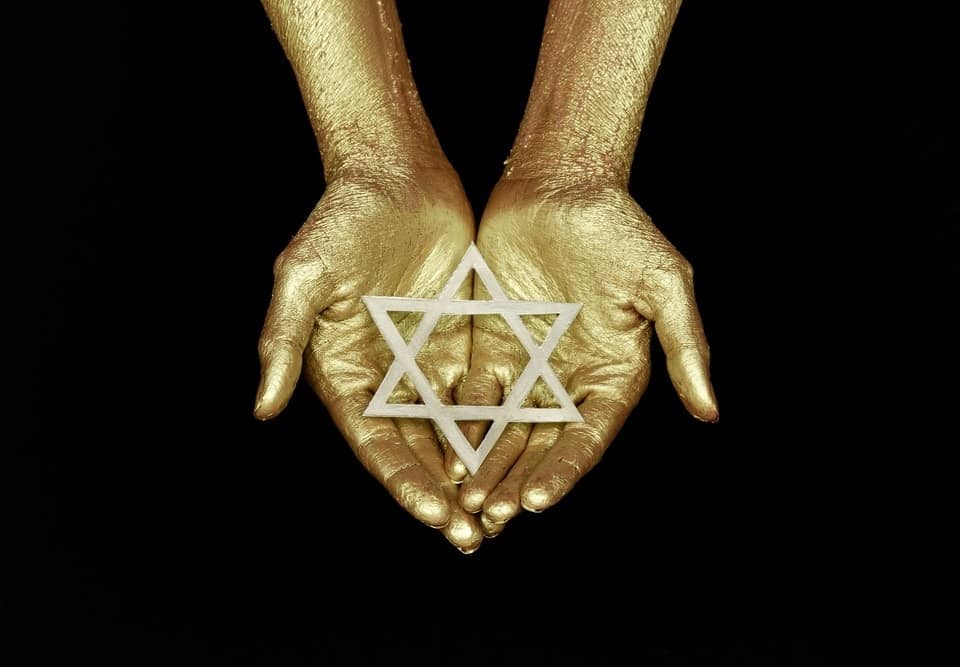
Sometimes, the journey back to Jewish life begins in the most unexpected way. In this case, it was a daughter-born to a Jewish father and non-Jewish mother-who found her way to Judaism and, in doing so, inspired her father to return as well.
Sarah (31) says her story really begins with her father, Shmuel. Born in North Africa in the 1950s, Shmuel grew up in a traditional home and attended a religious school. When he immigrated to Israel at age sixteen with his family, they settled on a Hashomer Hatzair kibbutz. There, he drifted away from the traditions of his youth and eventually let go of even the most basic Jewish observances.
It was on the kibbutz that Shmuel met a non-Jewish volunteer from a European city who had come to help the young State of Israel. She was kind, polite, and beautiful, and Shmuel decided to marry her. They traveled to her hometown solely to hold the wedding ceremony, and then returned to live in Israel.
Over the years, the couple had several children-one of them was Sarah. “When we were little,” Sarah recalls, “my father began to feel nostalgic for Judaism. You could see that he felt that something was missing. We started doing a few things: making Kiddush on Friday night, holding a Seder on Pesach, eating matzah, and fasting on Yom Kippur. That was the extent of it. It caused tension between my parents, because my mother wasn’t willing to keep every mitzvah that my father wanted to observe.”
Sarah found this partial observance confusing. “I told my father, ‘Why is it okay for you to work on Shabbat, while I’m not allowed to go out Friday night?'”
A Deep Desire to Convert
“From a very young age, I knew I wanted to convert. There was never any doubt. I always believed in God and the Torah, even if I didn’t know much. And I felt a deep connection to the tzaddikim (righteous figures)-that came from my father, who, despite everything, always respected them deeply. After all, he’s Sephardi,” she says with a smile.
“My entire life I envied those who were born Jewish. I felt it wasn’t fair-they were Jewish from birth, while I was born to a Jewish father and a non-Jewish mother. I would ask God, ‘Why not me?’ From the time I was little, I felt I wanted to be part of the chosen people. Being Jewish is such a privilege, and I wasn’t willing to miss out on it. Life without Judaism felt like life without purpose. Judaism endows life with meaning. It’s not just living, it’s living with direction. I wanted to be close to God, and I felt He wanted me to. It was something that came from my heart. The intellectual understanding came only after I converted and began learning, when I realized how true Judaism is.”
Eventually, Sarah’s family moved to France, her mother’s native country. On one visit to Jerusalem, a rabbi “converted” the whole family on his own initiative-without a proper halachic (Jewish legal) process. “Of course, it had no validity,” Sarah says. “We hadn’t accepted Torah and mitzvot (Divine commandments). I’m very frustrated with rabbis who do this. It’s so confusing. When I later told another rabbi about it during my conversion process, he looked uncomfortable and said, ‘Maybe only your ‘conversion’ counted, because you had serious intentions to accept mitzvot-so maybe you weren’t allowed to desecrate Shabbat during the conversion process?'”
Still, Sarah knew that the so-called conversion meant nothing.
Taking Steps Toward Judaism
As she got older, she began taking on more mitzvot. At sixteen, she decided it was time to formally convert and went to the local rabbinate. They declined, sensing she wasn’t ready, in addition to the halachic requirement to initially discourage a prospective convert.
“After I left, I realized they were right. I needed to strengthen my connection to Judaism and prepare myself. I told my family I wanted to keep kosher from now on. My father supported me. He would drive eight hours to Paris every few months to buy kosher meat. We’d store it in the freezer, and my whole family would eat only kosher. We were careful with kosher cheese too. I still wasn’t ready to convert-I was wearing pants-but the fire inside me was growing.”
While waiting to move to Israel, Sarah earned a master’s degree in law and began a three-year internship. But she decided to put her legal career on hold and move to Israel first to convert.
“At Last, I Converted”
“I came to Israel and lived on a religious kibbutz. Before boarding the plane, I bought a lot of skirts, thinking everyone there wore them, but it wasn’t exactly like that,” she laughs. She studied Hebrew for six months, then spent a year studying for conversion. She eventually went before the rabbinical court of the late Rabbi Druckman and, at last, completed her conversion.
Today, Sarah is married to a Torah scholar and takes pride in her Jewish home and her children. She works in her hometown for a publishing company that produces legal books and journals.
“There’s no better feeling than getting close to God,” she says. “Anyone who doesn’t keep Torah and mitzvot should really ask themselves why they’re alive? What’s the point of going to work every day if there’s no closeness to God? Observing Torah and mitzvot is the greatest privilege, and God gave it only to the Jewish people. It’s such a loss to miss it. Shabbat, Jewish life is all so full, so rich.”
When asked what she would say to a Jew considering marrying a non-Jew, Sarah doesn’t hesitate: “If you ask my father, he’ll tell you it’s not a good idea. It’s very hard to wake up one day and realize, ‘Wow, I’m Jewish, but my wife and kids aren’t.’ When it comes to the children, there’s no fixing it. My father is so happy I converted, but what about the rest of the family, who aren’t Jewish yet? From my own perspective, I really wouldn’t recommend it. It’s very hard for children to grow up in a divided, confused home.”