
When Love Isn’t Enough
Intermarriage, identity, and the cost of losing our connection
Love. The word that has inspired thousands of songs and novels—some tear-jerking, some soul-stirring. It’s the theme humanity returns to again and again. And not just any love, but love that defies boundaries.
But does every boundary-crossing love story have a happy ending? Are there moments when the painful outcome could have been foreseen? Here are a few important things worth considering—truths that may help you avoid heartbreak.
“But Why Not?”
In previous generations, the idea of marrying outside the Jewish people was unthinkable. Parents didn’t just discourage it; they spoke about it with deep conviction. It was something that simply wasn’t done. That sense of clarity and instinctive boundaries was woven into the fabric of Jewish life.
Nowadays though, that clarity has faded. Even those who still feel a visceral discomfort with intermarriage often struggle to explain why. What once felt self-evident now feels uncertain, even to those raised with the instinct to say no.
The scope of intermarriage in Jewish communities around the world has reached staggering levels. In hushed tones, some now speak of a “silent Holocaust”—a demographic erosion of the Jewish people without a single bullet fired. While Jews once overwhelmingly married other Jews, something has shifted. Globalization, social media, and the ease of international travel have made cross-cultural relationships far more common. According to a recent report released by the Pew Research Center, a staggering 60% of US Jews marry non-Jewish spouses.
With this shift, the clarity once felt around intermarriage has begun to fade.
Strong at First
When people fall in love, the feeling is powerful. It’s easy to believe that this person is “the one.” But ask any couple married for years, and they’ll tell you: the intensity fades and the spark dissolves. What comes next is the real work—partnership, patience, and compromise. Marriage isn’t just about love; it’s about navigating life’s ups and downs together, and bridging the inevitable differences.
In interfaith marriages, those differences multiply. Cultural gaps, conflicting sensitivities, irreconcilable family values, and divergent visions for the future often surface over time. Research consistently shows that relationships built on fundamental differences face a higher likelihood of breakdown. And one of the most painful, often-overlooked challenges is the reaction of family.
When parents, siblings, or extended relatives cannot accept a non-Jewish partner, it doesn’t just create awkwardness. The ensuing difficulties are far more significant than they first appear, because family is meant to be an inseparable part of our lives. Our families are supposed to be there for births, grandchildren’s birthdays, holidays, celebrations, and even shared vacations. Choosing a partner who isn’t Jewish often means forfeiting that presence. The warm, supportive family unit is replaced by loneliness.
But the loss of family ties is only one layer of a much larger social cost. A relationship with a non-Jewish partner can bring tension into nearly every social setting—at work, in the neighborhood, or among friends. In each of these environments, subtle (and sometimes not-so-subtle) disapproval is constantly in the background.
Beyond all this, the most painful consequence of all falls on the children. They bear the deepest wound, growing up in a fractured reality—torn between two identities, unsure of who they really are, and often unable to find their place in the world.
Losing My Jewish Soul
Let’s take a step back in history. Avraham—the first Jew—was also the first to reject intermarriage. He refused to let his son Yitzchak marry the local Canaanite women and instead sent his trusted servant all the way to Charan, his homeland, to find a suitable wife. Yaakov followed the same path. And when his daughter, Dinah, became involved with a Canaanite man, it was seen as a family tragedy.
The Torah does not leave room for ambiguity. It explicitly forbids intermarriage: “Do not intermarry with them: do not give your daughter to his son or take his daughter for your son” (Devarim 7:3).
Why? Because Judaism is, at its core, a family. All Jews are descendants of Yaakov. That’s why, no matter what a Jew does or believes, they remain part of that family: “A Jew, even if he sins, is still a Jew” (Sanhedrin 44a).
Jewish identity is something we are born into—not something we earn, adopt, or choose (except in the case of converts). And yet, there is one decision that can sever that bond: starting a new family with someone outside the Jewish people.
When a Jew chooses to build a life with a non-Jewish partner, they are not only stepping away from their traditions and national identity, but from their very roots. They are detaching from their spiritual source, from the wellspring that breathes life into the Jewish soul.
Jewish and non-Jewish souls come from entirely different spiritual worlds, with different purposes and destinies. Every being has its own role, its own path. But when a Jew unites with someone whose soul is not aligned with theirs, it disrupts that spiritual structure. The Torah calls this rupture karet, a cutting off of the highest part of the soul, a disconnection from eternal life.
So ask yourself: Can love be called “true” if it requires one person to completely sever who they are at the core?
The Two Halves of the Soul
The Torah of mystical tradition teaches that every soul comprises two halves: one masculine and one feminine. When a soul descends to this world, it splits—one half enters as a man, the other as a woman. Only when these two halves unite beneath the chuppah (Jewish wedding canopy) are they restored to a single, complete soul. That is why one of the seven blessings recited under the wedding canopy is: “Blessed are You, O Lord our God, King of the universe, Creator of man”—for now a whole human being is recreated. The Torah reveals that each of us has a predestined mate who perfectly complements our own soul’s half.
When a Jew marries someone who isn’t Jewish, he or she forfeits the chance to meet the soulmate meant specifically for them—one whose very essence is the other half of their own soul. A union with that original half will always be far more successful and fulfilling than any other match, because it is literally “half” of one’s soul waiting to be reunited.
But this raises the pivotal question: is there anything in the world stronger than love? Anything more binding and soul-anchoring? If there isn’t, then each person may follow their own desires. But if there is—if something in your soul transcends love—then it demands our full attention.
Embracing God’s Divine Blueprint
Our present feelings may pull us toward a different life plan, yet whose plan is truly best? Perhaps there is a higher design awaiting us—one far greater than anything we could imagine. The late IDF soldier Hadar Goldin—who fell at age 22 during Operation Protective Edge in 2014—penned reflections on Mesillat Yesharim:
I did not come to fulfill my own plans, but the plans of the Holy One, blessed be He, and they are not meant to match mine one-for-one. The central question is: Do I carry out His plans? […] Focus on deeds that care not for yourself, but for the fulfillment of the Divine purpose. (Mesillat Yesharim with Hadar Goldin, Maggid, 2018, ch. 9).
Goldin’s words challenge us to look beyond our impulses and align our lives with the transcendent mission God set for each soul. In the end, the choice is ours: pursue the fleeting pull of personal desires, or heed the soul’s deeper calling toward its destined counterpart and God’s ultimate plan.
The Identity Crisis Facing Children of Intermarriage
Children born to intermarried couples often grow up with deep confusion about their identity and sense of belonging. In Judaism, a child’s religion is determined by the mother. In Islam, it’s determined by the father. This means that a child born to a Jewish mother and a Muslim father is considered Jewish according to Jewish law, but Muslim according to Islamic tradition.
To add to the complexity, Israel’s Ministry of Interior will not recognize a child like this as Jewish. Instead, the child is officially registered as having “no religion.”
In one notable case, a mixed-faith couple petitioned the family court in Israel and asked to register their daughter as belonging to both religions. The court rejected the request, and the child was registered as non-Jewish.
These children often grow up in a fractured reality, caught between two worlds, grappling with internal conflict and lacking a clear sense of identity. Many of them struggle emotionally and require psychological support to cope with the unique challenges of their dual background.
For them, the question “Who am I?” is not just philosophical. It’s deeply personal, and often painfully unresolved.
The Hidden Pain Behind Intermarriage in Israel
As of 2015, around 5% of couples in Israel were in interfaith marriages. Among them were many Jewish women who had married Muslim men. Behind these numbers lie countless painful—and often tragic—stories.
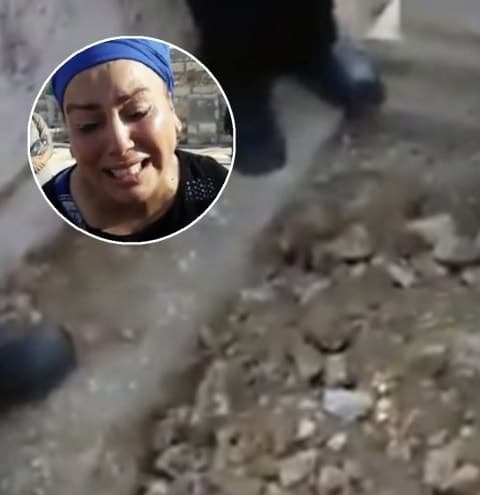
For many of these women, it began with a whirlwind romance. The man showered her with gifts, compliments, and attention. Enchanted, she agreed to marry him. But because Islam does not permit a Muslim man to marry a Jewish woman, she was required to convert to Islam before the wedding. She then left behind her family and moved with him to an Arab village.
That’s where the dream often turned into a nightmare. What followed was a cycle of verbal and physical abuse, threats, and isolation. Some women found themselves effectively imprisoned in their homes, cut off from the outside world.
In Israel today, several organizations work to rescue women from these situations. They help them escape—often with their children, who have been raised as Arabs—and enable them to return to Jewish life and Israeli society.
For these women, the journey back is long and fraught with pain. But with courage and support, many are finding their way home.
The Global Jewish Community Is Shrinking—And the Statistics Say It All
The rates of assimilation and intermarriage in Jewish communities around the world are steadily rising. As of 2008, nearly 40% of Jews in France and England were marrying outside the faith. In Russia, the intermarriage rate stood at a staggering 75%. In the United States, 55% of Jews married non-Jews, and according to American Jewish population surveys, the Jewish community is shrinking as a direct result of assimilation.
Israel, too, is not immune. According to Israel’s Central Bureau of Statistics, by 2021 there were 85,000 mixed marriages in the country—52,000 of them involving a non-Jewish woman and 32,000 involving a non-Jewish man. Israel’s Interior Ministry reports an even higher number: 111,000 intermarried couples live in Israel today.
Professor David Passig, an expert in predicting technological, social, and educational trends, presented findings at a “Future-Oriented Financial Thinking” conference, based on research conducted at the Technion. The data showed that the global Jewish intermarriage rate stands at a staggering 64%.
Meanwhile, Professor Sergio Della Pergola, widely considered the leading international authority on Jewish demography, stated in an interview with Ynet: “There’s no question that the research points to a shrinking core of the Jewish people.”
These numbers don’t just inform—they warn. The story they tell is not just about data. It’s about the future of Jewish identity, continuity, and survival.
How a Radical Decision Shaped the Future of American Jewry
Jewish law is clear: Jewish identity is passed through the mother. But in 1983, the Reform movement in the United States made the controversial decision to recognize a child born to a Jewish father as Jewish, even if the mother is not Jewish.
This ruling had no halachic (Jewish legal) basis. It was a response to the rising rates of intermarriage in America and an attempt to “create” more Jews by broadening the definition of who is considered Jewish. The move was so drastic that even other Reform communities around the world refused to accept it.
Nearly four decades later, many within the movement regret the decision. Even the former president of the Reform movement has acknowledged the damage. With Jewish numbers in the U.S. continuing to decline, it’s become painfully clear: what was intended as a solution may have accelerated the erosion of Jewish continuity.
Source: “Three Decades Since the Reform Movement’s Decision to Recognize Paternal Descent,” Jewish People Policy Institute, 2013
The Hidden Crisis Behind the Numbers
In 1945, approximately 6 million Jews lived in the United States. Remarkably—and alarmingly—by 2011, that number remained virtually unchanged. How is that possible?
Over those decades, US Jews didn’t experience a Holocaust, or terrorist campaigns, or devastating wars on American soil. How could the Jewish population remain stagnant in a country defined by growth, freedom, and opportunity?
The answer is stark: assimilation.
If American Jews had married exclusively within the Jewish community since 1945, today there would be an estimated 36 million Jews in the U.S. Instead, we’ve lost a staggering 30 million “potential” Jews, five times the number murdered in the Holocaust.
This isn’t just a demographic statistic. It’s a wake-up call. The silent toll of intermarriage and disconnection from Jewish identity is erasing generations—not with violence, but with indifference.
The Identity Crisis Facing Children of Intermarriage
Children born to intermarried couples often grow up with deep confusion about their identity and sense of belonging. In Judaism, a child’s religion is determined by the mother. In Islam, it’s determined by the father. This means that a child born to a Jewish mother and a Muslim father is considered Jewish according to Jewish law, but Muslim according to Islamic tradition.
To add to the complexity, Israel’s Ministry of Interior will not recognize a child like this as Jewish. Instead, the child is officially registered as having “no religion.”
In one notable case, a mixed-faith couple petitioned the family court in Israel and asked to register their daughter as belonging to both religions. The court rejected the request, and the child was registered as non-Jewish.
These children often grow up in a fractured reality, caught between two worlds, grappling with internal conflict and lacking a clear sense of identity. Many of them struggle emotionally and require psychological support to cope with the unique challenges of their dual background.
For them, the question “Who am I?” is not just philosophical. It’s deeply personal, and often painfully unresolved.
The Global Jewish Community Is Shrinking—And the Statistics Say It All
The rates of assimilation and intermarriage in Jewish communities around the world are steadily rising. As of 2008, nearly 40% of Jews in France and England were marrying outside the faith. In Russia, the intermarriage rate stood at a staggering 75%. In the United States, 55% of Jews married non-Jews, and according to American Jewish population surveys, the Jewish community is shrinking as a direct result of assimilation.
Israel, too, is not immune. According to Israel’s Central Bureau of Statistics, by 2021 there were 85,000 mixed marriages in the country—52,000 of them involving a non-Jewish woman and 32,000 involving a non-Jewish man. Israel’s Interior Ministry reports an even higher number: 111,000 intermarried couples live in Israel today.
Professor David Passig, an expert in predicting technological, social, and educational trends, presented findings at a “Future-Oriented Financial Thinking” conference, based on research conducted at the Technion. The data showed that the global Jewish intermarriage rate stands at a staggering 64%.
Meanwhile, Professor Sergio Della Pergola, widely considered the leading international authority on Jewish demography, stated in an interview with Ynet: “There’s no question that the research points to a shrinking core of the Jewish people.”
These numbers don’t just inform—they warn. The story they tell is not just about data. It’s about the future of Jewish identity, continuity, and survival.
The Hidden Crisis Behind the Numbers
In 1945, approximately 6 million Jews lived in the United States. Remarkably—and alarmingly—by 2011, that number remained virtually unchanged. How is that possible?
Over those decades, US Jews didn’t experience a Holocaust, or terrorist campaigns, or devastating wars on American soil. How could the Jewish population remain stagnant in a country defined by growth, freedom, and opportunity?
The answer is stark: assimilation.
If American Jews had married exclusively within the Jewish community since 1945, today there would be an estimated 36 million Jews in the U.S. Instead, we’ve lost a staggering 30 million “potential” Jews, five times the number murdered in the Holocaust.
This isn’t just a demographic statistic. It’s a wake-up call. The silent toll of intermarriage and disconnection from Jewish identity is erasing generations—not with violence, but with indifference.
The Hidden Pain Behind Intermarriage in Israel
As of 2015, around 5% of couples in Israel were in interfaith marriages. Among them were many Jewish women who had married Muslim men. Behind these numbers lie countless painful—and often tragic—stories.
For many of these women, it began with a whirlwind romance. The man showered her with gifts, compliments, and attention. Enchanted, she agreed to marry him. But because Islam does not permit a Muslim man to marry a Jewish woman, she was required to convert to Islam before the wedding. She then left behind her family and moved with him to an Arab village.
That’s where the dream often turned into a nightmare. What followed was a cycle of verbal and physical abuse, threats, and isolation. Some women found themselves effectively imprisoned in their homes, cut off from the outside world.
In Israel today, several organizations work to rescue women from these situations. They help them escape—often with their children, who have been raised as Arabs—and enable them to return to Jewish life and Israeli society.
For these women, the journey back is long and fraught with pain. But with courage and support, many are finding their way home.
How a Radical Decision Shaped the Future of American Jewry
Jewish law is clear: Jewish identity is passed through the mother. But in 1983, the Reform movement in the United States made the controversial decision to recognize a child born to a Jewish father as Jewish, even if the mother is not Jewish.
This ruling had no halachic (Jewish legal) basis. It was a response to the rising rates of intermarriage in America and an attempt to “create” more Jews by broadening the definition of who is considered Jewish. The move was so drastic that even other Reform communities around the world refused to accept it.
Nearly four decades later, many within the movement regret the decision. Even the former president of the Reform movement has acknowledged the damage. With Jewish numbers in the U.S. continuing to decline, it’s become painfully clear: what was intended as a solution may have accelerated the erosion of Jewish continuity.
Source: “Three Decades Since the Reform Movement’s Decision to Recognize Paternal Descent,” Jewish People Policy Institute, 2013
Looking back on a summer crush and the faith that helped me walk away
I fell hard for Colin Edwards—a charming, sun-kissed Australian lifeguard with golden curls and a smile that stretched like the Poconos sky—during a week-long lifeguard and instructor course I was required to complete before starting my job at an Orthodox summer program.
It was the summer after my freshman year of college. I had commuted from home all year and was nervous about being in a place where no one knew me, where the word “Jew” had barely been uttered. I didn’t need a visible Star of David to feel different. I was different. I brought my own food, prayed quietly early in the morning so no one would notice, and struggled to observe even the smallest mitzvot (Divine commandments) in a laid-back, secular environment.
On the second day, I wandered through a local mall with a few new friends and bought a miniskirt and tiny tee shirt—things I’d never wear at home. But even in that outfit, I was still the most modestly dressed person there. That night, after whispering the Shema, I felt like that old riddle: If a tree falls in a forest and no one hears it, does it make a sound? If no one saw my religious practice, if it didn’t impact anyone else, did it still matter?
I never intended to fall for Colin. I was raised in a deeply religious home. The idea of dating someone outside my faith wasn’t just forbidden—it was unthinkable. I couldn’t imagine bringing someone like him to my parents’ Shabbat table or raising children with someone who didn’t value Judaism at the center of life. Still, there was a spark. He was funny, magnetic, curious, and he noticed me. People started asking if we were a couple.
One night, under a sky lit with stars, Colin turned to me and asked, “Would you ever marry someone who wasn’t Jewish?” “No,” I replied. “But what if you fell in love with someone who wasn’t?”
I wanted to tell him I already had, but I didn’t say a word. I thought if I didn’t say the words aloud, they wouldn’t become real. I stared at the ground, then whispered, “I can’t. I won’t.” I’m not sure if he believed me. I’m not sure if I even believed myself.
I knew he admired my convictions, even if he didn’t share them. But admiration isn’t enough. I craved someone who would challenge me in Torah thought, someone who’d fall asleep on the couch with a Jewish book on his chest, someone who would cry with me on Tisha B’Av or stand beside me, trembling, on Yom Kippur. That person would never be Colin.
We are, ultimately, the sum of our choices. And no matter how hard I tried to imagine a life where we could coexist, I couldn’t shake the truth. I didn’t want a family where Judaism was optional. I didn’t want to raise children where God was negotiable.
The night before we said goodbye, I lay in my bunk and whispered the Shema, cloaked by the mountain’s still darkness. I thought of my grandmother reciting the same words in a concentration camp barracks. The unbroken chain. The privilege. The responsibility. I couldn’t let her down. I couldn’t let myself down.
When the course ended, I was both heartbroken and relieved. We said our goodbyes—his eyes watery, a dull ache in my heart. We exchanged a few letters that summer, but eventually we drifted. I returned to the embrace of those who know me, love me, and invest in every inch of who I am. And I was grateful that I hadn’t crossed a line I couldn’t uncross.
But it shook me. I had always believed I was unshakable. And yet, in just a few days in a secular environment I had felt the pull of a connection that didn’t align with anything I believed in. It made me wonder what would happen if I lived long-term in a place with no Jewish infrastructure? How easy would it be to slip, one quiet compromise at a time?
Years have passed. I barely remember Colin’s face now. I don’t remember the way his cologne smelled or the exact shade of his eyes. But I remember the fear. The sadness. The inner tug-of-war. Looking back, I don’t think it was love—it was curiosity, the thrill of something new, and the strange time-warp of camp-life where days feel like weeks and everything is more intense than it really is. It was totally wrong.
And I thank God for giving me the clarity to see that, and the strength to walk away.
A similar version of this story appeared on chabad.org.