
If God Is Good, Why Is Life So Hard?
Every evening, the 8 o’clock news reminds us that the world is filled with all types of pain. But if God is good, and He created the world and humanity out of love, why is there so much suffering, hardship, and tragedy? Why didn’t God create a world in which everyone is healthy, wealthy, and happy? What is the purpose of suffering? Why does difficulty exist at all?
God did, in fact, create a world filled with joy and goodness, but He also created a world in which suffering exists. People face painful trials, illnesses, and tragedies. Why did God do this? Why not make a perfect world, free of pain, where everything runs smoothly?
Jewish tradition offers several answers to this question. Let’s explore a few:
1. Atonement
On a primary level, suffering serves as atonement for wrongdoing and is a form of repairing the soul. Often, people face challenges in their lives as a result of sins they committed, either in this life or in previous reincarnations. The purpose of suffering is to cleanse the soul and help it achieve spiritual refinement for the sake of its eternal state. As the verse states: “For there is no righteous person on earth who does good and does not sin” (Kohelet 7:20).
Suffering in this world can shield a person from far greater pain in the World to Come. In truth, it is a profound act of kindness from the Creator, Who—in His infinite and eternal wisdom—knows that temporary hardship in this life is far better than spiritual loss or suffering in the eternal life that follows. As the Ramban (Nachmanides) writes:
Even if God were to take away from a person all the goodness of this world, and that person were to live in the suffering of Iyov for his entire life, it would still be better than being punished in the World of Souls with the suffering of Gehenna, or losing part of his soul’s elevation and closeness to the Divine light.” (Ramban, Introduction to the Book of Iyov)
In other words, suffering purifies and elevates the soul in this world, preparing it to receive the full goodness of the World to Come, a world that is entirely good.
To illustrate this idea, consider the way deep hypnosis is used to treat soldiers suffering from PTSD. During the treatment, the patient is guided through deep relaxation back to the traumatic moments on the battlefield. He feels as if he is reliving the terrifying scene. But at the same time, the medical team embraces him, surrounds him with support, and expresses encouragement: “We’re here with you! You’re not alone! You’re safe and protected!” This controlled re-exposure, combined with support, helps release the soldier’s intense and repressed memories and emotions and ultimately allows him to reclaim his quality of life.
An outside observer might be shocked, even outraged, to see someone so frightened and vulnerable. But if they understood the long-term healing generated by this technique, they would recognize the deep compassion guiding the entire process.
From our limited human perspective, we see only the fleeting illusion of this world, while God sees the full picture—eternity in all its depth and clarity. He knows precisely which experiences each soul needs to undergo in this life to reach the eternal good. When a person internalizes that this world is merely preparation for the World of Truth, it changes how they view life’s hardships.
It’s important to add: sometimes righteous and good people endure suffering not because of their own sins, but because of the sins of others. In rare cases, individuals with very elevated souls take upon themselves the suffering that others might have borne. A spiritually refined person’s suffering can substitute for that of many less spiritually advanced people. These few individuals bear pain in order to lighten the harsh decrees that would otherwise befall others.
2. Human Growth
The second reason for suffering is that it helps us grow. The Hebrew word for “trial” (nisayon) is related to the word for “banner” (nes), which is something that is raised up high. A test is meant to elevate us.
No one wants to suffer. But when a person responds to suffering in the right way, it can become a powerful catalyst for growth. As the prophet Hoshea says: “Though I disciplined them, I strengthened their arms, but they think evil of Me” (Hoshea 7:15). Suffering acts like heavy weights, and those who carry them develop stronger spiritual muscles. If a person truly understood how much they gain through these trials, they would embrace them with love.
Beyond this, it is instructive to remember that God never tests a person with something they cannot handle. If someone is going through hardship, it is a sign that they have the strength to reach beyond themselves and realize new levels they never imagined they could.
When things are easy, it is human nature to become complacent: “Yeshurun grew fat and kicked” (Devarim 32:15). Sometimes, God brings challenges to shake a person out of their comfort zone and prompt them to reexamine their life, reconnect to God, pray more deeply, reflect more seriously, and commit to personal change. As the Midrash (Devarim Rabbah 3:2) puts it: “I bring suffering upon you so that you will prepare your hearts for Me.”
Sometimes, suffering is the only way to reroute a person from a destructive path toward a meaningful one. Many people have testified that their life’s purpose became clear only after they grappled with a tragedy, accident, or illness.
3. The Mystery of the Divine
Many struggle to accept the answer that “God’s ways are hidden”—but that doesn’t make it any less true. When a finite human being stands before the Infinite Creator of the universe, admitting that “I don’t know” isn’t a sign of weakness. It’s the most honest response. There are countless things we simply cannot comprehend in this world. Complete understanding only comes in the next world, where everything will one day be revealed with perfect clarity.
We have no idea what goes on behind the scenes. What we do know is this: there is a Master of the world, and every event is part of a deliberate plan, even if we can’t detect it.
The Book of Iyov tells the story of a man who lost everything: his wealth, his children, and his health. He begged God for an explanation. And God responded, though not with an explanation that Iyov could fully understand. God responded with a revelation. God’s message was clear: there is a reason for everything, rooted in Divine justice and wisdom, but it lies beyond the limits of human understanding. Trying to explain it would be like trying to tell a baby why the doctor needs to give them a painful injection. The truth is, when it comes to suffering, there is no simple answer.
The universe runs on an infinitely complex and brilliant Divine plan. As God says to Iyov: Where were you when I laid the foundations of the earth?!” (Iyov 38:4). In other words: Were you there when I designed the entire cosmos? How can you expect to understand what is far beyond your grasp?
In this grand plan, the life of every single person is overseen and guided by God to bring them to ultimate good. We often don’t understand why things happen, but that’s because we can’t see the full picture, which includes atonement from previous reincarnations, choices made by the soul before birth, and other spiritual realities beyond our awareness.
When Iyov saw the Divine light, he understood that behind everything in this world lies God’s eternal purpose: the ultimate reward that awaits those who revere Him in the World to Come. As the prophet Yeshayahu says: “No eye has seen, God, except Yours, what You have prepared for those who wait for You” (Yeshayahu 64:3). Our Sages explain this as referring to the indescribable delight that awaits the righteous in the World to Come, which is beyond human grasp.
Rabbi Chaim of Volozhin, the foremost disciple of the Vilna Gaon, reveals in his classic work Nefesh Hachaim a profound and powerful spiritual practice that has the ability to nullify all forms of harsh judgment, suffering, and negative decrees that may befall a person.
What is this remarkable remedy?
To believe deeply and unwaveringly that “There is nothing besides Him” and trust with absolute conviction that the Holy One, blessed be He, governs the world as He wills, and that no other force, person, or circumstance can override His will in any way.
Rabbi Chaim of Volozhin writes:
In truth, this is a great principle and a wondrous remedy to remove and cancel all harsh judgments and external forces. When a person firmly sets in their heart the belief that “The Lord is the true God, and there is none besides Him”—that there exists no other power whatsoever in this world or in any of the worlds, and that everything is filled solely with His Simple, Unified Presence. When a person completely nullifies in their heart any sense of fear or influence from any other force or will in existence, paying no attention to them, and instead devotes and attaches the purity of their thoughts solely to the One Master, blessed is He, then, through this alone, God grants the person strength and all other forces and wills in the world are automatically nullified. They are rendered completely powerless to affect him in any way whatsoever (Nefesh HaChaim, Gate 3, Chapter 12).
Jewish law teaches that one who mourns the loss of a close relative observes shiva, a seven-day period of mourning. During this time, friends and loved ones visit the mourner to offer comfort. But how exactly does one offer comfort in a time of pain?
There are a few important principles to keep in mind:
First and foremost, when visiting someone in mourning, Jewish law (and emotional awareness) dictates to remain silent until the mourner begins the conversation. The mourner sets the tone, and it is our role to respond accordingly, with sensitivity and respect for where they are emotionally.
Second, it’s often appropriate to offer a few words of comfort or wisdom. Among Sephardim, the traditional phrase is “Min Hashamayim tenuchamu”—”May you be comforted by Heaven.” Among Ashkenazim, the common formula is: “Hamakom yenachem etchem b’toch she’ar avelei Tzion v’Yerushalayim, v’lo tosifu l’da’ava od”—”May the Omnipresent comfort you among the mourners of Zion and Jerusalem, and may you know no more sorrow.”
Sometimes, saying nothing is best of all. The purpose of the visit is not to deliver a perfect speech, but to show support. Presence speaks louder than words. Words may touch the mind, but it is the quiet companionship, the simple act of showing up, that comforts the heart. For many mourners, knowing that they aren’t alone is the deepest solace of all.
Suffering, like beauty, is often in the eye of the beholder. It is a relative experience, shaped by the consciousness of the individual. What one person sees as painful, another may not perceive as suffering at all.
A well-known chasidic story illustrates this powerful truth. Two students once approached their teacher, the Maggid of Mezeritch, with a question about a puzzling Talmudic teaching: “A person is obligated to bless God for the bad just as he blesses Him for the good.” They were bewildered. How can someone bless God for something painful with the same sincerity and joy as something good?
The Maggid responded, “Go to the study hall and speak to Reb Zusha. He will explain it to you.”
Now, Reb Zusha was a man who had endured intense hardship and suffering. He lived in poverty and physical pain, yet was known for his piety and inner joy. The students hurried to the study hall and posed their question to him.
Reb Zusha smiled warmly and replied, “Why are you asking me? You should ask someone who has actually experienced suffering. I’ve never suffered at all.”
Only then did the students understand that accepting suffering with joy doesn’t mean pretending it doesn’t exist, but rather reaching a level where even pain is no longer perceived as suffering. Reb Zusha’s response revealed not only his faith but his complete alignment with the Divine will, where everything—even hardship—was received with gratitude and peace.
Rabbi Shneur Zalman of Liadi, known as the Alter Rebbe and founder of the Chabad movement, had the custom of reading the weekly Torah portion aloud in the synagogue. One year, however, he was out of town on the Shabbat of Parashat Ki Tavo—the portion that includes the section of rebuke in which the Torah details, in stark and painful terms, the curses and punishments that will befall the Jewish people if they abandon God’s commandments.
That Shabbat, another person was appointed to read from the Torah. Among those present in the synagogue was Rabbi Shneur Zalman’s young son, Dovber, who would later succeed him as the second rebbe of Chabad. As the verses of rebuke were read aloud, they struck the sensitive boy with such emotional force that he was overcome with anguish. The words affected him so deeply that weeks later, on Yom Kippur, his father debated whether to allow him to fast, given how weakened he still was.
When asked, “But you hear this same Torah portion every year, what made this time different?” young Dovber answered simply: “When my father reads, they don’t sound like curses.”
In the presence of his father’s voice—infused with love, holiness, and spiritual depth—the same verses of warning were heard not as threats, but as veiled blessings. What to others might sound harsh, he heard through a different lens.
Iyov was known to be a righteous man, whose behavior did not warrant the intense suffering he endured. His pain seemed far too severe for any wrongdoing he had committed during his lifetime.
But according to a prophetic vision he received, the deeper reason for his suffering was revealed. God showed him the image of Terach, the father of Avraham, who had worshipped idols and led others astray. God then explained: Iyov was a reincarnation of Terach. His current suffering was not punishment for this lifetime, but rather a cleansing of the spiritual damage caused in a previous one.
Once Iyov’s soul had been fully purified from the sins of his past life, his suffering came to an end, and he was once again blessed with peace and abundance.
This account offers a powerful perspective: suffering is not always about the present. Sometimes, it is part of a soul’s journey toward complete restoration.
Rabbi Chaim of Volozhin, the foremost disciple of the Vilna Gaon, reveals in his classic work Nefesh Hachaim a profound and powerful spiritual practice that has the ability to nullify all forms of harsh judgment, suffering, and negative decrees that may befall a person.
What is this remarkable remedy?
To believe deeply and unwaveringly that “There is nothing besides Him” and trust with absolute conviction that the Holy One, blessed be He, governs the world as He wills, and that no other force, person, or circumstance can override His will in any way.
Rabbi Chaim of Volozhin writes:
In truth, this is a great principle and a wondrous remedy to remove and cancel all harsh judgments and external forces. When a person firmly sets in their heart the belief that “The Lord is the true God, and there is none besides Him”—that there exists no other power whatsoever in this world or in any of the worlds, and that everything is filled solely with His Simple, Unified Presence. When a person completely nullifies in their heart any sense of fear or influence from any other force or will in existence, paying no attention to them, and instead devotes and attaches the purity of their thoughts solely to the One Master, blessed is He, then, through this alone, God grants the person strength and all other forces and wills in the world are automatically nullified. They are rendered completely powerless to affect him in any way whatsoever (Nefesh HaChaim, Gate 3, Chapter 12).
Suffering, like beauty, is often in the eye of the beholder. It is a relative experience, shaped by the consciousness of the individual. What one person sees as painful, another may not perceive as suffering at all.
A well-known chasidic story illustrates this powerful truth. Two students once approached their teacher, the Maggid of Mezeritch, with a question about a puzzling Talmudic teaching: “A person is obligated to bless God for the bad just as he blesses Him for the good.” They were bewildered. How can someone bless God for something painful with the same sincerity and joy as something good?
The Maggid responded, “Go to the study hall and speak to Reb Zusha. He will explain it to you.”
Now, Reb Zusha was a man who had endured intense hardship and suffering. He lived in poverty and physical pain, yet was known for his piety and inner joy. The students hurried to the study hall and posed their question to him.
Reb Zusha smiled warmly and replied, “Why are you asking me? You should ask someone who has actually experienced suffering. I’ve never suffered at all.”
Only then did the students understand that accepting suffering with joy doesn’t mean pretending it doesn’t exist, but rather reaching a level where even pain is no longer perceived as suffering. Reb Zusha’s response revealed not only his faith but his complete alignment with the Divine will, where everything—even hardship—was received with gratitude and peace.
Iyov was known to be a righteous man, whose behavior did not warrant the intense suffering he endured. His pain seemed far too severe for any wrongdoing he had committed during his lifetime.
But according to a prophetic vision he received, the deeper reason for his suffering was revealed. God showed him the image of Terach, the father of Avraham, who had worshipped idols and led others astray. God then explained: Iyov was a reincarnation of Terach. His current suffering was not punishment for this lifetime, but rather a cleansing of the spiritual damage caused in a previous one.
Once Iyov’s soul had been fully purified from the sins of his past life, his suffering came to an end, and he was once again blessed with peace and abundance.
This account offers a powerful perspective: suffering is not always about the present. Sometimes, it is part of a soul’s journey toward complete restoration.
Jewish law teaches that one who mourns the loss of a close relative observes shiva, a seven-day period of mourning. During this time, friends and loved ones visit the mourner to offer comfort. But how exactly does one offer comfort in a time of pain?
There are a few important principles to keep in mind:
First and foremost, when visiting someone in mourning, Jewish law (and emotional awareness) dictates to remain silent until the mourner begins the conversation. The mourner sets the tone, and it is our role to respond accordingly, with sensitivity and respect for where they are emotionally.
Second, it’s often appropriate to offer a few words of comfort or wisdom. Among Sephardim, the traditional phrase is “Min Hashamayim tenuchamu”—”May you be comforted by Heaven.” Among Ashkenazim, the common formula is: “Hamakom yenachem etchem b’toch she’ar avelei Tzion v’Yerushalayim, v’lo tosifu l’da’ava od”—”May the Omnipresent comfort you among the mourners of Zion and Jerusalem, and may you know no more sorrow.”
Sometimes, saying nothing is best of all. The purpose of the visit is not to deliver a perfect speech, but to show support. Presence speaks louder than words. Words may touch the mind, but it is the quiet companionship, the simple act of showing up, that comforts the heart. For many mourners, knowing that they aren’t alone is the deepest solace of all.
Rabbi Shneur Zalman of Liadi, known as the Alter Rebbe and founder of the Chabad movement, had the custom of reading the weekly Torah portion aloud in the synagogue. One year, however, he was out of town on the Shabbat of Parashat Ki Tavo—the portion that includes the section of rebuke in which the Torah details, in stark and painful terms, the curses and punishments that will befall the Jewish people if they abandon God’s commandments.
That Shabbat, another person was appointed to read from the Torah. Among those present in the synagogue was Rabbi Shneur Zalman’s young son, Dovber, who would later succeed him as the second rebbe of Chabad. As the verses of rebuke were read aloud, they struck the sensitive boy with such emotional force that he was overcome with anguish. The words affected him so deeply that weeks later, on Yom Kippur, his father debated whether to allow him to fast, given how weakened he still was.
When asked, “But you hear this same Torah portion every year, what made this time different?” young Dovber answered simply: “When my father reads, they don’t sound like curses.”
In the presence of his father’s voice—infused with love, holiness, and spiritual depth—the same verses of warning were heard not as threats, but as veiled blessings. What to others might sound harsh, he heard through a different lens.
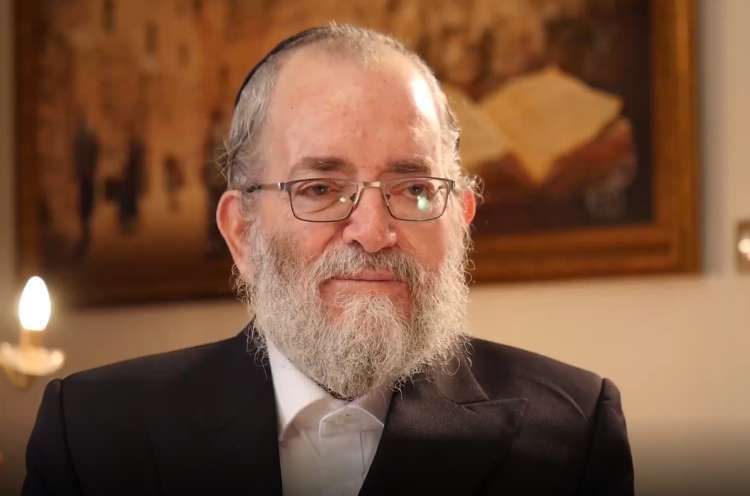
“I could’ve accepted the label, gotten an official government-issued disability card, done nothing with my life, and been rewarded for it. Honestly, it pays. But at age seven, I made a decision: I will not be disabled.”
Aharon Margalit’s life story is not just painful; it’s nearly unimaginable. You could divide his suffering among a dozen people and each one would still have more than enough to carry. And yet, Margalit lives with an optimism and joy that defy explanation. He has become a national symbol of resilience and a living lesson in courage, faith, and the will to choose light over darkness.
A Childhood Marked by Silence and Struggle
By age two and a half, Aharon had developed a severe stutter. Soon after, he contracted a devastating case of polio, which left his entire body paralyzed. “I could’ve received a disability card and been done with it,” he says with biting sarcasm. “You get a lot of attention that way… But even as a kid, I knew—I didn’t want to be a cripple.”
Through sheer determination and a mother who instilled unshakable belief in him, Aharon learned to walk. Not easily. He used crutches. Later, he walked on his own, though with what he calls “spare parts”: plastic replacing bone, metal rods up to his knees, and shoes that weighed 13 pounds. But he walked.
Despite being unable to lift his arms above his chin due to shoulder paralysis, he’s never asked anyone to get him a book from a high shelf. Instead, there’s a small ladder in every room of his home and office.
“I’m not disabled,” he insists. “That’s not who I am.”
Loss, Illness, and the Decision Not to Surrender
Margalit buried two of his children. He has battled cancer three separate times, undergone dozens of surgeries, and endured relentless rounds of chemotherapy. And yet, he maintains: “I am not sick.”
He approached each treatment like a meeting on his calendar. He entered every surgery singing. The sign on his hospital room door read: “This room only welcomes smiles.”
He recalls his years in a children’s facility for the disabled, starting at age two years and nine months. His mother could only visit once a week, traveling 15 hours round-trip for 90 minutes with her son. On Shabbat and holidays, the halls filled with laughter, hot food, and gifts—except around his bed. “No one stood there,” he remembers. “Just me, alone in the dark.”
He survived 130 Shabbats and holidays like that. He’d pull the blanket over his head after breakfast and stay under until the next morning. “I called them my ‘Blanket Shabbats.'” And through the hurt, he made a vow: “One day, I’ll teach the world how powerful words are. Because a tongue can bury a child alive.”
Beaten at School, Mocked at His Bar Mitzvah
He hated school. The boys played two games: fistfights and soccer. “They made me the judge for the fights,” he says. “Turns out, the judge got punched from both sides.” And when they played soccer, “I was the ball.”
His Bar Mitzvah was seared into his memory. As he climbed to the bimah with crutches, he began reciting the blessings and froze. Again and again he tried, and failed. His father whispered, “Breathe deep and try again.” But he couldn’t breathe. He dropped his crutches and ran, locking himself in the bathroom in tears. That scar, he says, never fully healed.
The “Vegetable”
His stutter was so severe that asking a stranger a question could take 30 minutes. “I never met anyone who stuttered worse than me,” he says. “I only spoke to my mother and a little to my father.” When he began yeshiva, he didn’t speak to anyone. “My mother would ask: ‘How’s yeshiva?’ I replied: ‘There’s a rabbi, students, books… and a vegetable. I’m the vegetable.'”
A Grieving Father, a Purposeful Life
At 27, he lost a daughter to a minor infection that spiraled out of control. Years later, a son—newly married—was murdered abroad, mistaken for someone else by the criminal underworld.
“Those were the hardest moments of my life,” he says. “But I knew I had a choice: to let grief consume me or to keep living.”
After the funeral, he told his family: “It feels like we’re on a train, and we’ve hit a deep crater in the ground. Now is the time to hold on with everything we’ve got. We’re not getting off.”
Grief, he says, must be met first with action, then with emotion. “Ask yourself: What does God want from me now? What do I need to do to stay on the train?”
One of his brothers was killed in Israel’s War of Attrition, and his parents took the loss especially hard. Margalit started a charity in his brother’s name, filed all the necessary forms in different government offices, and simply handed his parents the completed paperwork. “Run it,” he said. “Channel your pain into purpose.” They did, and the charity still exists today.
When Doctors Gave Up, He Didn’t
At one point, doctors diagnosed him with a rare brain tumor and gave him weeks to live. He wept, prayed, and then heard a voice inside: “Aharon, are you really going to serve the Angel of Death coffee? Snap out of it.”
He reframed his illness as a mission: “God wants me to experience cancer, not just support those who have it. He wants me to walk through the fire myself.”
Every chemo session became a field mission. “I made it my goal to make every single person in that room smile.” He never lay in bed after treatment. “Even on the worst days, it was just another calendar entry.”
He entered every surgery—17 in 18 months—singing and dancing. “The nurses greeted me with, ‘Mr. Margalit, what’s on the playlist today?'” A sign on his door read: “Enter only with a big smile.”
One oncologist told him coldly, “You have 6 to 10 weeks left. No treatment will help.” Margalit stormed out, but not before saying, “When they carry you to your grave, I’ll still be alive. I’ll shout down to you: ‘Remember me, Professor?'”
Years later, they became friends, and he reminds the doctor of that moment every time they meet.
“From Darkness to Light”: A Philosophy of Choosing Joy
“I never use the words ‘trouble’ or ‘suffering,'” he says. “Those words weaken you. I use the word ‘challenge.’ And when you call it a challenge, you roll up your sleeves.”
He doesn’t look back in bitterness. “The past gives me strength. If I end up back in a wheelchair, I’ll dance. Because for decades, I got to walk.”
He views life as a spiritual boot camp. “God gave me 60 years of training. Every challenge made me more compassionate, more human.”
Or, as he puts it: “I would’ve paid a million dollars not to go through it, but now that I have, I wouldn’t sell the experience for a million more.”
Margalit urges others to shift perspective: “Life is beautiful. Don’t give up. There’s always a way forward.”
Once, a pessimistic doctor told him, “You’re wasting your time.” Margalit replied: “If the Angel of Death wants me, he’ll have to saw through the bars.”
And he adds, “Every day, in every situation, you have a choice. You just have to find the strength within you.”