
Science, Faith, and the Myths We’ve Been Told
Religious faith is often written off as mere superstition, something mystical, held onto by “the masses” unwilling to embrace modernity. As proof, people frequently invoke the atheism of scientists, viewed as society’s intellectual vanguard. Yet beneath this narrative lies a different reality. A closer look at the data reveals a story far less simple, and far more surprising.
The claim that most scientists are unbelievers has been repeated so often that it’s taken on the weight of fact. Yet when serious researchers put this assumption to the test, the findings startled many. Leading the way was Professor Elaine Howard Ecklund, a sociologist at Rice University, who set out to explore the role of faith in the lives of scientists together with research teams from universities around the world. Their findings were surprising:
Only 34% of scientists described themselves as atheists. Even within this group, 12% self-identified as “spiritual.” 36% of scientists said they believe in God or in some higher power. 30% admitted they do not know whether God exists, explaining that it cannot be proven one way or another.
Perhaps most striking, over 70% of scientists said they believe science and faith are complementary, representing different aspects of reality.
In a broader international study, Ecklund’s team drew four key conclusions: There are more believing scientists than commonly assumed. Religion and science often overlap in the day-to-day work of researchers. Many scientists—including some who identify as atheists—see spirituality in science itself. The idea of a stark conflict between science and religion is largely a Western cultural construct.
Additional studies reinforce this picture. For example, 76% of physicians in the United States identify as believers. The supposed clash between science and faith is far less clear-cut than public perception suggests. So why don’t we hear more about this?
The Conservatism of the Scientific Establishment
Despite its reputation for objectivity, the scientific establishment can be surprisingly rigid. Professor Ze’ev Bechler, an Israeli philosopher of science, noted that some of the most stubborn opposition to scientific progress has historically come not from churches or the general public, but from within the scientific community itself. He explained that a scientific theory usually emerges when only a small portion of the relevant facts fit neatly into it. Most of the other facts in the field either do not align with the theory or seem unrelated. No scientist could continue working under such conditions without setting those contradictions aside. To move forward, a researcher must ignore the conflicting evidence and hold firmly to the theory. In this sense, overlooking refutations can actually be rational—it may even be the only rational course available. To survive and make progress, science sometimes requires arbitrary decisions, such as disregarding contrary data, and within that context, arbitrariness itself becomes a rational necessity.
The late Harvard historian of science, Dr. Bernard Cohen, observed that most revolutionary scientific theories initially encountered hostility from those who preferred to cling to established modes of thought. He suggested this resistance reflects a general human trait—an “inertia of thought” or reluctance to change—which produces a kind of scientific orthodoxy. Even great scientific revolutionaries, Cohen noted, often held tightly to certain orthodoxies of their own.
Bias, Propaganda, and the Piltdown Man
Moreover, the scientific establishment isn’t free from bias or outside agendas. At times, bias in science has taken dramatic forms. One infamous example is the “Piltdown Man” hoax in the early 1900s. Amateur archaeologist Charles Dawson combined a human skull with the jawbone of an ape, then stained and filed the jaw to make it appear ancient. The forgery was initially hailed as the “missing link.” But when experts at the British Museum tested the bones, they discovered that the skull was truly ancient, while the jaw was only a few decades old. Worse still, the jaw had been chemically treated to look old and physically altered to fit.
More often, the biases of science are subtle—small omissions, choice of words, or implicit assumptions that nudge the public toward a worldview stripped of faith. Israeli mathematician Professor Eliyahu Rips once warned:
There is no greater mistake than believing science is entirely objective. Within science itself, there is often a propaganda war led by strongly anti-religious individuals, driven by their own kind of religious zeal. Today, consensus in science cannot be blindly trusted. Critical judgment is essential. And if you cannot judge, at least recognize the limits of your knowledge. Consensus, by itself, means nothing.
When “Freedom” Isn’t Free
Liberal society often claims to value freedom of thought and open inquiry. In practice, however, things can look very different. Scientists, academics, educators, and cultural leaders sometimes seek to blur or suppress evidence for the existence of God.
Unfortunately, even within science, silencing and distortion occur. Certain ideas are considered unacceptable—unspeakable—even if there is evidence to support them. The reason? They don’t fit the prevailing models.
Consider recent cases in Israel. Dr. Yerucham Levi, a lecturer in medical ethics, was dismissed for expressing views deemed “unacceptable” in academia. He protested that his firing violated basic rights of dignity, academic freedom, and free speech. Similarly, Dr. Gabi Avital, chief scientist of Israel’s Ministry of Education, was removed from his post after making statements that challenged scientific consensus.
This problem is not confined to Israel. In early 2020, the U.S. Congressional Climate Committee, led by Representative Kathy Castor, called on Google to censor videos that questioned the premise of climate change. The lesson is clear: scientific “freedom” is open to everyone, aside from those who express certain opinions.
Faith, Science, and Intellectual Humility
Some of the greatest scientists recognize the need for humility in the face of the mysteries of creation. While reason can take us far, it cannot fully explain the universe.
Professor Doron Aurbach, a world-renowned chemist and recipient of prestigious scientific awards, rediscovered his Jewish faith through his work in chemistry. In an interview with the Israeli media outlet YNET, he said:
Academia fails when it comes to studying the past, things that cannot be proven. Most biologists are programmed to accept Darwin’s stories, and their belief is almost religious. Begin to question them, and they panic. Darwin’s tales are not science but speculation. There is no real proof that life evolved from primitive to complex forms. From a Jewish perspective, it is possible that creation unfolded in stages, but Divine intervention is necessary. It cannot happen by chance. As a scientist, I completely reject the way evolution is taught today, as a purely random, unguided process without design or higher power. Most of my colleagues abroad, I can tell you, believe in a Creator. They see a higher power through their scientific understanding.
Albert Einstein, too, admitted as much in a conversation with his sister:
Only religion can give life true meaning. Look around—the mountains, the trees, the rain, the wind, the sky, the stars. Who but a Higher Power directs them all? Nature is a wonder, a majestic beauty. Everything works like a great machine, every part fulfilling its role at exactly the right time. It is breathtaking.
Historically, the perceived tension between science and faith was often shaped by the role of the Christian Church. For centuries, it was forbidden to publish ideas that contradicted core Christian doctrines. This is why Galileo Galilei was famously persecuted for asserting that the Earth orbits the Sun, a claim that directly challenged Church teachings at the time.
Judaism, by contrast, never imposed blanket censorship on scientific inquiry. However, it also did not embrace scientific doctrines that sought to dismantle the foundations of faith rather than seek truth in earnest.
One of the most famous scientific debates surrounding quantum mechanics took place between two legendary physicists: Albert Einstein and Niels Bohr (who was also of Jewish descent). Einstein rejected the theory’s apparent randomness, arguing that it didn’t align with a truly scientific worldview. He believed that every natural process must have a single, determined outcome governed by the laws of physics, whereas quantum mechanics suggested otherwise.
It was in this context that Einstein famously declared, “God does not play dice.” To which Bohr sharply replied, “Einstein, stop telling God what to do.”
Isaac Newton, the father of modern science, remains one of the most revered figures in British history. Beyond his groundbreaking scientific achievements, Newton left behind a remarkable collection of theological writings, many of which focus on Judaism.
Over the course of his life, Newton wrote extensively on the Hebrew Bible, Jewish mysticism, the Temple in Jerusalem, faith, and more. It turns out that Newton treated his religious studies with the same seriousness and intellectual rigor as his scientific research, engaging deeply with both fields in parallel.
Today, Newton’s collection of theological manuscripts is housed in the National Library of Israel in Jerusalem.
Max Planck, one of the most prominent scientists of his time and recipient of the 1918 Nobel Prize in Physics for his foundational work in quantum mechanics, held a unique perspective on the relationship between science and faith.
In a lecture at a scientific conference, he remarked:
While both religion and natural science require a belief in God for their activities, to the former, He is the starting point, to the latter, the goal of every thought process. To the former, He is the foundation, to the latter, the crown of the edifice of every generalized world view.
The 20th century marked a golden age in the study of physics, particularly with the emergence of atomic theory and quantum mechanics. The conclusions drawn from these theories were astonishing, often sounding more like science fiction than science. Among them: a single atom can exist in two places at once, it’s theoretically possible to pass through walls, and human consciousness can influence scientific measurements.
Today, these ideas are widely accepted as foundational assumptions by much of the scientific community.
Historically, the perceived tension between science and faith was often shaped by the role of the Christian Church. For centuries, it was forbidden to publish ideas that contradicted core Christian doctrines. This is why Galileo Galilei was famously persecuted for asserting that the Earth orbits the Sun, a claim that directly challenged Church teachings at the time.
Judaism, by contrast, never imposed blanket censorship on scientific inquiry. However, it also did not embrace scientific doctrines that sought to dismantle the foundations of faith rather than seek truth in earnest.
Isaac Newton, the father of modern science, remains one of the most revered figures in British history. Beyond his groundbreaking scientific achievements, Newton left behind a remarkable collection of theological writings, many of which focus on Judaism.
Over the course of his life, Newton wrote extensively on the Hebrew Bible, Jewish mysticism, the Temple in Jerusalem, faith, and more. It turns out that Newton treated his religious studies with the same seriousness and intellectual rigor as his scientific research, engaging deeply with both fields in parallel.
Today, Newton’s collection of theological manuscripts is housed in the National Library of Israel in Jerusalem.
The 20th century marked a golden age in the study of physics, particularly with the emergence of atomic theory and quantum mechanics. The conclusions drawn from these theories were astonishing, often sounding more like science fiction than science. Among them: a single atom can exist in two places at once, it’s theoretically possible to pass through walls, and human consciousness can influence scientific measurements.
Today, these ideas are widely accepted as foundational assumptions by much of the scientific community.
One of the most famous scientific debates surrounding quantum mechanics took place between two legendary physicists: Albert Einstein and Niels Bohr (who was also of Jewish descent). Einstein rejected the theory’s apparent randomness, arguing that it didn’t align with a truly scientific worldview. He believed that every natural process must have a single, determined outcome governed by the laws of physics, whereas quantum mechanics suggested otherwise.
It was in this context that Einstein famously declared, “God does not play dice.” To which Bohr sharply replied, “Einstein, stop telling God what to do.”
Max Planck, one of the most prominent scientists of his time and recipient of the 1918 Nobel Prize in Physics for his foundational work in quantum mechanics, held a unique perspective on the relationship between science and faith.
In a lecture at a scientific conference, he remarked:
While both religion and natural science require a belief in God for their activities, to the former, He is the starting point, to the latter, the goal of every thought process. To the former, He is the foundation, to the latter, the crown of the edifice of every generalized world view.
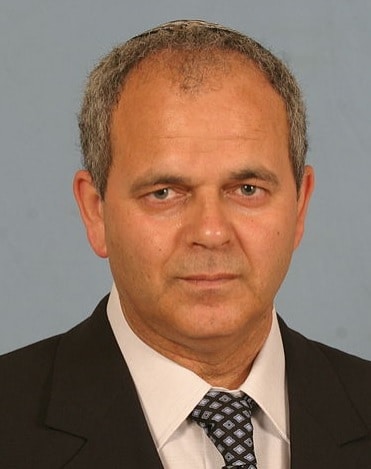
Dr. Gabi Avital was fired from his post as Chief Scientist at Israel’s Ministry of Education over statements deemed unacceptable by the scientific ‘consensus.’ In an interview with the Israeli paper Makor Rishon, he shared his side of the story.
Dr. Gabi Avital, an aerospace engineer and lecturer at the Israeli Air Force Academy, was appointed Chief Scientist of the Ministry of Education in 2009. His removal from the post followed a series of public statements, most notably his opposition to the exclusive teaching of evolutionary theory in Israeli schools. Dr. Avital argued that, alongside evolution, students should also be exposed to critiques of the theory.
His remarks—along with his public skepticism about human-caused global warming and the environmental impact of recycling—ultimately led to his dismissal by the Minister of Education.
According to Dr. Avital, certain ideological groups launched a media campaign against him due to his views. “I said Darwin was a great scientist,” he explains, “but some of his followers took his theory too far, especially in its social applications, such as social Darwinism. I quoted Professor Jacob Talmon, who wrote that ‘One of the foundations for eroding the moral commandment, Thou shalt not kill, lies in Darwin’s theory of natural selection. Darwinism dismantled one of the strongest barriers that once upheld that command.'”
“And then came the environmentalists,” he continues. “I said the green movement had become a kind of religious cult. When someone jokingly asked me what I do with plastic bottles, I replied that I respectfully throw them in the trash because it costs three times as much to produce a recycled product, and the process uses chemicals that cause pollution.”
Avital recounts an encounter with a journalist from a major Israeli newspaper. “He asked if I stood by my statements, and I said absolutely. When he asked about evolution, I said I’d like Israeli children to be exposed to other perspectives, because this theory has some serious gaps.”
“The materials taught in schools and universities as absolute truth often include serious scientific flaws. That needs to be addressed. I wasn’t calling for what they have in Kansas or California, where the law mandates teaching creationism alongside evolution. I simply asked that alternative voices be heard.”
“There are many in academia who keep their mouths shut out of fear. The academic world is deeply conservative, with entrenched agendas that require near-divine force to break through, especially in environmental science. There’s no chance that a scientific article arguing that global warming, if it exists, is not caused by humans would make it into a major scientific journal.”
Dr. Avital believes that neo-Darwinism fails to answer Darwin’s own test of the theory, namely, the lack of transitional fossils. “How did birds evolve from reptiles? The explanation goes: the reptiles were jumping from tree to tree until wings grew. That insults human intelligence. The internal structure of a bird’s wing is fundamentally different from that of any reptile or mammal. Claiming random evolution links them is too easy,” he says.
“The avoidance comes from the biologists,” he continues. “Every unknown phenomenon is chalked up to ‘evolution.’ If they can’t explain something, they say it’s ‘natural selection’ or ‘adaptation.’ I want real scientific research for the benefit of humanity. But if you explain everything with one blanket term, where does that take you? I want an open discussion. Why are there major contradictions in the fossil record? Why was there a need to fake skulls to prove certain claims? That’s why I remain deeply skeptical.”
On global warming, Dr. Avital adds: “It’s all fear tactics. Around the year 2000, the head of Britain’s Meteorological Office predicted that by the end of the decade, children in the UK would no longer know what snow looks like. Al Gore warned that the glaciers would melt, and sea levels would rise by 20 feet. And yet, that decade ended very differently.”
Reflecting on his clashes with the system, Avital says, “From the moment I stepped into the role, I was met with suspicion. I was labeled: ‘He’s just an engineer, what’s he doing here?’ But I come from academia, industry, and education. To them, being intellectual, religious, and right-wing was too much. And then to touch the sacred cow of evolution? I thought they’d argue with me, have a proper debate, after all, the essence of science is inquiry.”
“Here comes a Chief Scientist trying to challenge the system, spark discussion, and raise other views that exist within the scientific community. And they say to me, ‘You’re restricted. You’re not allowed to speak.’ That hypocrisy drives me mad.”
A Hebrew version of this story was printed in the Israeli weekly Makor Rishon on February 11, 2011.