
Resurrection of the Dead: A Jewish Perspective
Judaism doesn’t view death as something final or absolute. On the contrary, belief in the resurrection of the dead is one of Judaism’s core principles. But when will resurrection take place? What will it look like? What kind of world will emerge? And will everyone merit eternal life in this new era?
While most people see death as the absolute end—a point of no return—Judaism challenges this assumption. Death, from a Jewish perspective, is not the end of existence but the close of a single chapter in the soul’s eternal journey.
Rewinding the Cosmic Clock
According to the Torah, God created humanity to embark on a path of spiritual refinement, culminating in the eternal joy of the soul. Adam, the first human, was created on the sixth day of creation, and the world was originally destined to reach its perfection on the seventh day—Shabbat. The way to achieve that was through obeying a single command, not to eat from the Tree of Knowledge.
This command wasn’t simply about avoiding fruit. It carried profound spiritual significance. Before Adam’s sin, evil existed outside of him. But after eating from the tree, good and evil became intertwined within his very being. According to the Sages, Adam intentionally chose this path—not to rebel, but to elevate creation through the deeper and more challenging process of battling inner evil and choosing good from within.
This new path was indeed loftier, but also longer and more difficult. Rather than completing creation in six days and entering a perfected Shabbat, the world was placed on a 6,000-year course of repair, followed by a seventh millennium of spiritual completion.
As this 6,000-year period draws to a close, several transformative events are expected: the war of Gog and Magog, the arrival of Mashiach, the resurrection of the dead, and the renewal of sacrificial service in the Third Temple. Afterward, the world will transition into the seventh millennium, which forms a new era of eternal life, where both body and soul exist in harmony, with the soul taking precedence.
The world itself will be radically transformed—perfect, peaceful, and holy. There will be no more war, illness, suffering, or selfishness. Evil impulses will vanish. The world will be filled with the Divine presence.
And when will all this happen? The exact date has not been revealed—but according to what we do know, it is very near. Very near indeed.
Rerouting the Journey
In Judaism, each person is born with a unique path of self-refinement to follow during their lifetime. After death, the soul stands before the Heavenly Court to be judged for its deeds. In some cases, the soul must return in another incarnation to complete its work, or go through other spiritual processes to become fully refined.
Once the soul fulfills its task, it enters the Garden of Eden, the spiritual paradise of souls, where it experiences sublime and indescribable delight.
But even this is not the final destination.
The Garden of Eden is only a temporary resting place—a spiritual layover for righteous souls. What comes next?
The world continues along its path of refinement until it reaches a Divinely ordained moment of transition. At that time, reality as we know it will undergo a revolutionary shift.
Before that shift, the world will endure a fierce and overwhelming conflict: the war of Gog and Magog. In its aftermath, a descendant of King David will rise—a soul uniquely elevated beyond that of the rest of the Jewish people. This leader, known as Mashiach, will be God’s emissary, sent to redeem Israel from suffering and announce the end of the era of spiritual refinement. The world will then move into its next phase: a perfected, redeemed reality.
In that new world, God’s presence will be revealed openly. There will be no more wars, no illness, no poverty, no pain. It will be paradise—not in heaven, but here on earth.
As part of this transformation, the dead will rise. The souls that were in the Garden of Eden will reunite with their bodies to become whole once again—body and soul together.
The End of Evil and the Dawn of Perfect Good
Until the coming of Mashiach, every human soul is a blend of good and evil. We are torn between kindness and integrity on the one hand, and anger, selfishness, and inertia on the other. The existence of evil plays a vital role; it makes free will possible. Our mission is to choose good as often as we can.
Once Mashiach comes, the era of moral struggle will end. Humanity will no longer be able—or need—to grow spiritually. Evil will serve no purpose and will be entirely removed. As the prophet Zechariah said: “And I will remove the spirit of impurity from the land” (Zechariah 13:2).
No longer will people be drawn to destructive desires. We won’t need to lock our doors—no one will steal. Shopkeepers won’t overcharge. Stores won’t need guards. Temptation will vanish, and holiness will fill the earth.
At that point, the resurrection of the dead will take place. The deceased will return in physical form. While they may initially rise with the same illnesses or impairments they had in life, they will then be healed completely. No one will suffer from deformity, pain, or disease. As the prophet Malachi said: “For you who revere My name, the sun of righteousness shall shine, with healing in its rays” (Malachi 3:20).
The prophet Yeshayahu also foretold: “He will swallow up death forever, and God the Lord will wipe away tears from every face” (Yeshayahu 25:8).
Individual Judgment
On Rosh Hashanah each year, every person is judged regarding the year ahead—livelihood, marriage, health, children, and more. The soul is also judged after death for everything it did, both good and bad.
A final and eternal judgment will take place at the time of resurrection during the Messianic era. This judgment will determine who is worthy of rising from the dead and living forever. Not everyone will merit resurrection, as the prophet Daniel said: “And many of those who sleep in the dust of the earth will awaken” (Daniel 12:2). The word “many,” rather than “all,” implies that some will not rise.
No one knows who will be included. Each person will be judged individually. Those who lived lives loyal to God and His Torah, those who made an effort to grow spiritually and fulfill the commandments, will have a stronger chance of rising.
Certain severe sins may disqualify a person from resurrection, unless they sincerely repent. These include: denial of God, denial of the Written or Oral Torah, denial of resurrection or the coming of Mashiach, leading others to sin, murder, habitual gossip or slander, public shaming, predatory lending without a halachic (Jewish legal) contract, suicide, neglect of Torah study or support for Torah study, and disrespect for Torah scholars, among other things. (See: Mishnah Sanhedrin 10:1; Rosh Hashanah 17a; Tosafot on Sotah 5a; Ketubot 111b.)
Still, if a person repents and changes course, their sins can be erased, and they too may merit resurrection.
Time to Get to Work
After resurrection, not everyone will be on the same spiritual level. Each person will rise with the degree of spiritual refinement they attained in their lifetime based on their personal effort and investment. Some may have lived with greater diligence or passion; others with less. But each person will live eternally on their personal spiritual level.
After resurrection, spiritual status can no longer change. This world is our only chance to grow. Just as a game’s score cannot be changed after the final whistle, our spiritual “score” is set once God’s presence is fully revealed.
The Talmud states: “The days of Mashiach will have neither merit nor liability” (Shabbat 151b). Once the truth is revealed, the test is over.
The Talmud also teaches: “Each person will be scorched by the canopy of their fellow” (Bava Batra 75a). Rabbi Moshe Chaim Luzzatto (known as the Ramchal) explains in Mesilat Yesharim that this is not envy. Rather, it’s the pain of seeing that others reached levels you could have reached too, had you only tried harder. In the World to Come, there is no faking, and no way to change the outcome. Spiritual levels are determined strictly by deeds. Those who did more will stand higher. Those who did less will remain lower. And the regret will be real.
So before the gates close—before the test ends—it’s time to jump on the train, roll up our sleeves, and make the most of every moment.
Cloning is a process by which the DNA sequence of a specific organism is replicated to produce a new organism that is genetically identical to the original. In 1996, a research team led by Ian Wilmut conducted the first-ever cloning experiment, and famously cloned a sheep named Dolly. Since then, scientists around the world have successfully cloned various animals, including mice, cats, cows, dogs, and monkeys.
Cloning is based on the fact that every cell in the body contains DNA, a complete genetic blueprint of the entire organism. Using this genetic information, scientists can recreate a being identical to the original from which the cell was taken.
While the idea that a single cell could regenerate an entire living body once seemed unimaginable, science now demonstrates that such a feat is possible. As scientific understanding advances, the concept of rebuilding the human body—down to its exact former form—feels increasingly aligned with the prophetic vision of resurrection, in which the deceased are restored in their original physical form.
In the prophetic vision of Yechezkel, known as “The Vision of the Dry Bones,” the prophet sees himself standing in a valley filled with dry, scattered bones. God asks him: “Can these bones come to life?” To which Yechezkel responds with humility, acknowledging Divine power: “O my Sovereign God, You alone know.”
God then commands him to prophesy that these bones will return to life: “Behold, I will bring spirit into you, and you shall live. I will put sinews upon you, bring flesh upon you, cover you with skin, and place a spirit within you, and you shall live. Then you will know that I am God.”
As Yechezkel delivers this prophecy, the bones begin to draw together, sinews and flesh cover them, and skin forms over them, yet they still lack the breath of life. God then instructs him to continue: “From the four winds, come O spirit, and breathe into these slain, that they may live.”
Yechezkel does as commanded, and the spirit enters the bodies. They rise to their feet, “an exceedingly great multitude.”
The Talmud expands on this vision, teaching that those resurrected by Yechezkel went on to ascend to the Land of Israel, marry, and raise families (Sanhedrin 92b).
God explains to Yechezkel that this vision is not only about the dead bones he saw before him, but a symbol of the future resurrection that awaits the entire people of Israel.
It is interesting to note the Bible also recounts two stories of resurrection, one that involved the prophet Eliyahu (see Melachim I, 17) and another that involved his disciple, the prophet Elisha (Melachim II, 4).
Losing a loved one is among the most painful experiences a person can face. Yet, the Jewish belief in resurrection offers a source of deep comfort and reframes death as a temporary separation, rather than a stark and final endpoint.
The prophet Daniel describes this hope with powerful imagery: “And many of those who sleep in the dust of the earth shall awake” (Daniel 12:2). He does not speak of the deceased as “dead” or “gone,” but as “those who sleep”—a subtle yet profound expression of faith in their eventual return.
This belief sustained many great sages through personal loss. When Rav Shach lost his daughter at a young age, he turned to Rav Chaim Ozer Grodzinski for solace. Rabbi Grodzinski, who had also lost his only daughter, shared that his steadfast belief in the resurrection of the dead had carried him through his personal pain.
He pointed to the Shemoneh Esrei prayer, where we affirm that God “keeps His faith with those who sleep in the dust.” That simple line, he said, holds profound meaning. It teaches that death is not an end but a longer sleep, and that one day, all who slumber will rise again.
As we hold onto this belief, we find strength to endure loss. For we trust that a day will come, as promised in Tehillim, when “our mouths will be filled with laughter and our tongues with joy.”
After the dramatic rescue of the Israelites from Egypt and the miraculous splitting of the sea, the nation erupted in joyous praise. They sang a song of thanksgiving to God, known as the Song of the Sea. Yet there is something curious about how this moment of praise is described: “Then Moshe and the children of Israel will sing this song to the Lord” (Shemot 15:1).
Why does the verse say “will sing” in the future tense rather than “sang” in the past?
The Sages explain that this unusual phrasing hints at something far more profound. According to the Talmud, this verse alludes to a future song that Moshe will sing—not in his lifetime, but at the time of the resurrection of the dead.
The Talmud teaches: “It does not say ‘sang’ but ‘will sing,’ from here we learn of the resurrection of the dead in the Torah” (Sanhedrin 91b).
A similar example appears in Yehoshua 8:30: “Then Yehoshua will build an altar to the Lord.” Again, the future tense—”will build”—is used, hinting at a time to come.
In this moment of song and salvation, the Torah subtly points not only to past redemption, but to future renewal, a time when the righteous will rise and once again lift their voices in song.
The resurrection of the dead will include even those who perished at sea. The Gemara (Gittin 57b) tells the heartbreaking story of the boys and girls of Jerusalem who were taken captive after the destruction of the Temple. Their Roman captors placed them on ships, intending to sell them into lives of exploitation. Aware of the fate that awaited them, the children asked: “If we drown ourselves in the sea, will we still merit resurrection?” The oldest child answered with the verse: “I will bring them back from Bashan, I will bring them back from the depths of the sea” (Tehillim 68:23), affirming that even those who perish in the water will be resurrected. Encouraged by this promise, the children leapt into the sea, sanctifying God’s name.
Cloning is a process by which the DNA sequence of a specific organism is replicated to produce a new organism that is genetically identical to the original. In 1996, a research team led by Ian Wilmut conducted the first-ever cloning experiment, and famously cloned a sheep named Dolly. Since then, scientists around the world have successfully cloned various animals, including mice, cats, cows, dogs, and monkeys.
Cloning is based on the fact that every cell in the body contains DNA, a complete genetic blueprint of the entire organism. Using this genetic information, scientists can recreate a being identical to the original from which the cell was taken.
While the idea that a single cell could regenerate an entire living body once seemed unimaginable, science now demonstrates that such a feat is possible. As scientific understanding advances, the concept of rebuilding the human body—down to its exact former form—feels increasingly aligned with the prophetic vision of resurrection, in which the deceased are restored in their original physical form.
Losing a loved one is among the most painful experiences a person can face. Yet, the Jewish belief in resurrection offers a source of deep comfort and reframes death as a temporary separation, rather than a stark and final endpoint.
The prophet Daniel describes this hope with powerful imagery: “And many of those who sleep in the dust of the earth shall awake” (Daniel 12:2). He does not speak of the deceased as “dead” or “gone,” but as “those who sleep”—a subtle yet profound expression of faith in their eventual return.
This belief sustained many great sages through personal loss. When Rav Shach lost his daughter at a young age, he turned to Rav Chaim Ozer Grodzinski for solace. Rabbi Grodzinski, who had also lost his only daughter, shared that his steadfast belief in the resurrection of the dead had carried him through his personal pain.
He pointed to the Shemoneh Esrei prayer, where we affirm that God “keeps His faith with those who sleep in the dust.” That simple line, he said, holds profound meaning. It teaches that death is not an end but a longer sleep, and that one day, all who slumber will rise again.
As we hold onto this belief, we find strength to endure loss. For we trust that a day will come, as promised in Tehillim, when “our mouths will be filled with laughter and our tongues with joy.”
The resurrection of the dead will include even those who perished at sea. The Gemara (Gittin 57b) tells the heartbreaking story of the boys and girls of Jerusalem who were taken captive after the destruction of the Temple. Their Roman captors placed them on ships, intending to sell them into lives of exploitation. Aware of the fate that awaited them, the children asked: “If we drown ourselves in the sea, will we still merit resurrection?” The oldest child answered with the verse: “I will bring them back from Bashan, I will bring them back from the depths of the sea” (Tehillim 68:23), affirming that even those who perish in the water will be resurrected. Encouraged by this promise, the children leapt into the sea, sanctifying God’s name.
In the prophetic vision of Yechezkel, known as “The Vision of the Dry Bones,” the prophet sees himself standing in a valley filled with dry, scattered bones. God asks him: “Can these bones come to life?” To which Yechezkel responds with humility, acknowledging Divine power: “O my Sovereign God, You alone know.”
God then commands him to prophesy that these bones will return to life: “Behold, I will bring spirit into you, and you shall live. I will put sinews upon you, bring flesh upon you, cover you with skin, and place a spirit within you, and you shall live. Then you will know that I am God.”
As Yechezkel delivers this prophecy, the bones begin to draw together, sinews and flesh cover them, and skin forms over them, yet they still lack the breath of life. God then instructs him to continue: “From the four winds, come O spirit, and breathe into these slain, that they may live.”
Yechezkel does as commanded, and the spirit enters the bodies. They rise to their feet, “an exceedingly great multitude.”
The Talmud expands on this vision, teaching that those resurrected by Yechezkel went on to ascend to the Land of Israel, marry, and raise families (Sanhedrin 92b).
God explains to Yechezkel that this vision is not only about the dead bones he saw before him, but a symbol of the future resurrection that awaits the entire people of Israel.
It is interesting to note the Bible also recounts two stories of resurrection, one that involved the prophet Eliyahu (see Melachim I, 17) and another that involved his disciple, the prophet Elisha (Melachim II, 4).
After the dramatic rescue of the Israelites from Egypt and the miraculous splitting of the sea, the nation erupted in joyous praise. They sang a song of thanksgiving to God, known as the Song of the Sea. Yet there is something curious about how this moment of praise is described: “Then Moshe and the children of Israel will sing this song to the Lord” (Shemot 15:1).
Why does the verse say “will sing” in the future tense rather than “sang” in the past?
The Sages explain that this unusual phrasing hints at something far more profound. According to the Talmud, this verse alludes to a future song that Moshe will sing—not in his lifetime, but at the time of the resurrection of the dead.
The Talmud teaches: “It does not say ‘sang’ but ‘will sing,’ from here we learn of the resurrection of the dead in the Torah” (Sanhedrin 91b).
A similar example appears in Yehoshua 8:30: “Then Yehoshua will build an altar to the Lord.” Again, the future tense—”will build”—is used, hinting at a time to come.
In this moment of song and salvation, the Torah subtly points not only to past redemption, but to future renewal, a time when the righteous will rise and once again lift their voices in song.
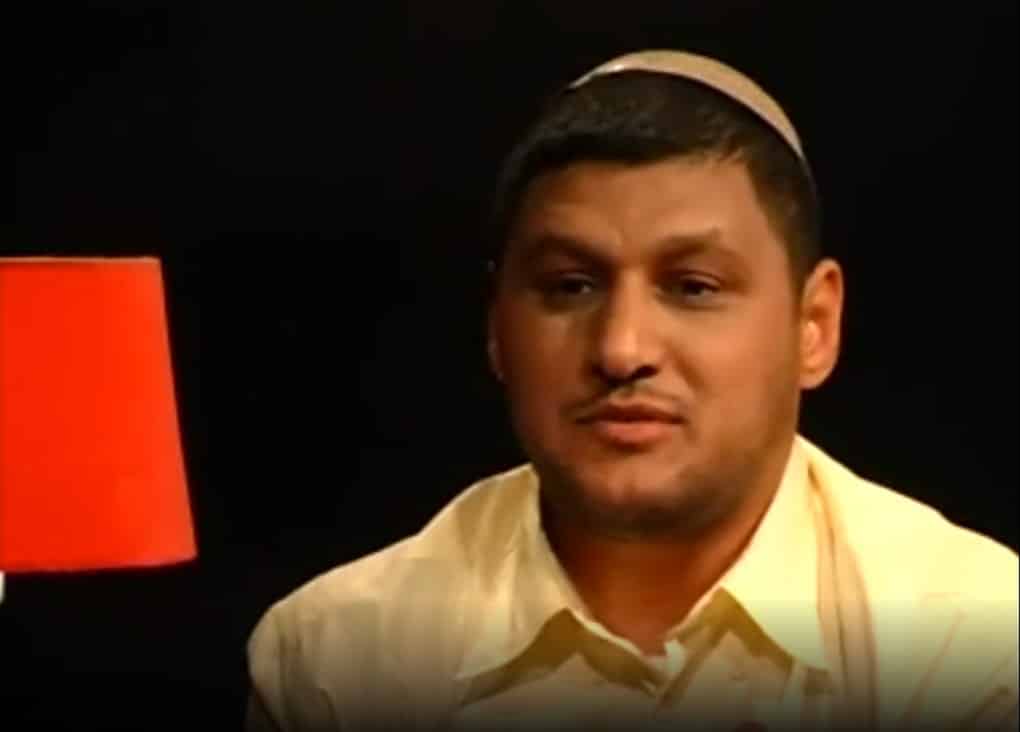
The Story of Sharon Nachshoni's Near-Death Experience
Sharon Nachshoni was only 26 years old when his life changed forever.
Sharon attended a vocational yeshiva high school in Yad Binyamin, served in an elite IDF unit, and worked as a counselor at a residential program in Rechovot after his army service. During that time, he got married and became a father. Life was busy and full of hope.
Then came the accident.
It was Thursday, June 26, 1997. I was driving my Subaru on the Yavne-Galya road, heading to reserve duty at Camp Julis. Just four minutes into the drive, my front left tire exploded. The car veered into the opposite lane and slammed head-on into an oncoming van. My hand was caught in the steering wheel. My body was crushed. Within seconds, I lost consciousness. I wasn’t breathing. I was trapped inside the wreck.
Emergency responders arrived quickly and worked for a long time to cut Sharon out of the mangled car. His lungs were blocked. He wasn’t breathing. His heart had stopped. Paramedics declared him dead and covered his body with a sheet.
A Mysterious Doctor and a Miracle in the Making
While police were documenting the fatal crash, traffic backed up on the road. On one of the buses stuck in the jam was a young man in uniform who introduced himself as an army doctor. Spotting the commotion, he asked, “Can I help?”
Paramedics pointed him to the survivors. “What about the one under the sheet?” he asked. “He’s gone,” they replied. “There’s nothing to be done.”
But the man insisted on checking. He examined Sharon and immediately performed an emergency field procedure, inserting a makeshift catheter to release the fluid trapped in Sharon’s lungs.
Seventeen minutes after he had been pronounced clinically dead, Sharon began to breathe.
Paramedics jumped into action. Sharon was rushed to the hospital with his body shattered, barely intact. But he was alive.
The mysterious doctor, however, had vanished. No one saw him leave. The bus he came from moved on. Despite repeated efforts, no one ever located him again.
A Body Broken, a Soul Awakened
Sharon underwent 18 major surgeries. Over two pounds of metal was implanted into his body. His left arm was crushed, both legs immobilized, his face disfigured. He was declared 100% disabled.
His wife and sister had been told he had died and were rushed to the hospital to identify the body. But as they arrived, they learned he had somehow survived.
“What they saw wasn’t a person,” said Sharon’s brother-in-law, Shachar Ashbal. “It wasn’t a body. His face was unrecognizable. His limbs were mangled. They’ll never forget that image.”
And yet, something strange began to happen.
While still unconscious, Sharon was heard murmuring:
“I saw Grandpa. He pushed me back.”
Later, when his condition stabilized slightly, his first clear question was:
“What happened to Aunt Miriam? Is she alive?”
At the time, the family hadn’t told him that Aunt Miriam—a righteous, charitable woman who had been ill for a long time—had passed away just hours after his accident. Not wanting to distress him, they lied and said she was fine. But Sharon kept pressing, repeating the question again and again.
“He Wasn’t the Same Person Anymore”
With each passing day of recovery, visitors to Sharon’s hospital room all felt the same thing: he was no longer the same person.
He murmured words no one expected from him:
“Suffering atones… God, I love You…”
Before the accident, Sharon had been a traditional Jew, though not particularly strict about observance. Now, something had shifted.
He began apologizing for old, forgotten things. He asked his wife to take down a certificate of honor he had hung on the wall. He asked his mother about a vow he had once made to donate an ark to a synagogue—years earlier after a motorcycle crash—but never fulfilled.
To his brother-in-law, he asked:
“Do you know Rabbi B.? I need to find him.”
A Blessing Foretold
Sharon’s family brought Sharon’s rabbi to the hospital. The rabbi whispered something in his ear. Later, he looked at Sharon and said out loud: “With God’s help, you will walk again. Your right leg will recover fully. Your left leg will have a slight limp, but you will walk.”
Doctors scoffed. The head of rehabilitation at the hospital told Sharon bluntly: “You’ll never walk again. Accept it.”
But Sharon didn’t accept it. He believed in the rabbi’s words.
Two months later, the prophecy came true. Sharon began walking again, just as described—freely on his right leg, with a slight limp on his left.
The doctor who had been so dismissive now asked for the rabbi’s number.
“Sharon’s a medical miracle,” he said. “But what’s more incredible is that your rabbi predicted it exactly.”
“I Saw the World of Truth”
One night, Sharon’s brother-in-law stayed with him in the hospital and finally pressed him: “Tell me what you saw. You have to tell someone.”
At first, Sharon resisted. “I’m afraid people will think I’ve lost my mind,” he said.
But eventually, he agreed and began to describe a spiritual experience more vivid and detailed than anything his family had imagined.
Sharon described entering a vast, boundless hall filled with people, souls who had passed on. They welcomed him with warmth and love. He saw his grandmother in full detail. People smiled at him as if they had been waiting for him.
But Sharon was wearing filthy, bloodstained clothes and felt deep shame. Everyone else was dressed in beautiful garments. He tried to hide.
He saw a blinding light, and from its sides, two smaller lights—one representing a “good voice,” the other a “harsh voice.” Four rabbinic figures, still alive in this world, were present on a sort of celestial tribunal.
Then he heard a terrifying debate: “One of them must stay,” said the harsh voice. “Either him, or Aunt Miriam.”
He saw her there, just as she had looked the night before. Sharon immediately offered: “I’ll stay. Let her go.”
But the good voice intervened: both were souls of great merit.
Then Sharon was shown his entire life, like a film reel in seconds: from baby photos to school fights, from moments of anger to acts of kindness. Everything.
He was asked three questions:
“ Did you conduct your business honestly?
“ Did you set aside time to study Torah?
“ Did you await the redemption?
When he didn’t understand the third question, his voice was taken away. The rest of the judgment continued without him.
He heard accusations about broken promises, shallow prayers, gossip, arrogance, and unresolved anger. But he also heard his virtues listed: generosity, Shabbat observance, respect for his wife, acts of kindness.
When it ended, he was asked: “Do you accept the mission to return and repair what must be repaired?” Though they specified three distinct things, Sharon refuses to enumerate them. Sharon responded that he committed to do one of them, and would try his very best to do the other two.
He was warned: “You will suffer greatly. But suffering is atonement. Be grateful for it.”
He was told that every injury on his body had a purpose. “Nothing in this world is random, not even a piece of paper blowing in the wind.”
As he left the hall in shame and awe, the last thing he saw was his own body lying in the ambulance. Then he woke up inside it.
Sharon endured immense pain. Eighteen major surgeries. Hundreds of treatments. Thousands of pills. But he walks. He lives.
“Sharon is not the same person,” his family says. “We watch him, and we learn from him. He carries a message that changes everyone who hears it.”
This story is based on Sharon Nachshoni’s testimony, as recorded in the book Or Chozer #2 authored by Oded Mizrachi.